01 Ecommerce development
Ecommerce Website Development in Coimbatore
A store people can actually check out of — and one they'd tell a friend about. Storefront, cart, payments, and platform, built as one system.
A cart people abandon is a checkout that made them think. A store nobody remembers never needed the discount to begin with.
02 Definition
What is ecommerce development?
Ecommerce development is the full system that lets someone find a product, decide to buy it, and actually complete that purchase — the catalogue, the cart, the payment, and the fulfilment behind it, working as one connected flow instead of separate pieces bolted together.
What's for sale
Products, categories, search, and the pages that present them.
How it's bought
Adding to cart, entering details, and paying — with as little friction as possible.
How it's delivered
Inventory, shipping, and the order actually reaching the customer.
Not sure which business model fits?
Tell us how you sell — B2C, B2B, or somewhere in between — and we'll map out the right build.
03 Business models
Who's buying changes what gets built
The same "add to cart" button means something different depending on who's clicking it.
Business to consumer
Direct sales to individual shoppers. Fast checkout and mobile-first browsing matter most.
Business to business
Bulk ordering, tiered pricing, and account-based logins — procurement, not impulse buying.
Consumer to consumer
A marketplace connecting sellers and buyers — vendor onboarding and trust systems are the real build.
Direct to consumer
A brand selling straight to its own customers — storytelling and owned data matter as much as the cart.
04 What's included
Everything a working store needs
Not every store needs every piece — we build the right combination for how you actually sell.
Storefront & catalogue
Shopping cart & checkout
Payment gateways
Platform & integration
Fulfilment & operations
Security & trust
05 Platform choice
Shopify, or something built to spec
Shopify
The default for most product-based stores — fast to launch, easy to manage day to day, with a huge app ecosystem for almost anything you'd need to add.
WooCommerce
Built on WordPress — a strong fit when the store sits alongside a lot of existing content or needs deep customisation on a budget.
Custom & headless
Built to spec when you need functionality off-the-shelf platforms don't support well — complex B2B pricing, unusual checkout logic, or specific performance needs.
Migrating from an existing store?
Products, customers, and order history move across — with redirects so you don't lose existing rankings.
06 AI in the store
Where AI actually helps a store
"Customers who bought this also bought" — suggestions based on real behaviour, not just category.
Shoppers describe what they want instead of guessing the exact product name or category.
Chat-based assistants handle order status and common questions before a human needs to.
Product descriptions and imagery get a faster first draft — reviewed and edited, not published blind.
AI speeds up parts of running a store. It doesn't replace deciding what to sell, who you're selling it to, or how the checkout should actually feel.
07 Why Akkenna
A store is more than a checkout
One connected team
Brand identity, content, and video already sit under one roof — the store doesn't get built in isolation from everything else that represents you.
No stitched-together vendors
One point of contact instead of a separate designer, developer, copywriter, and video team who've never spoken to each other.
Built for how you actually sell
B2C, B2B, or D2C — the platform and checkout flow follow your business model, not a template's assumptions.
Based in Coimbatore
Discuss your catalogue, customers and day-to-day store operations with our Coimbatore team. We agree the scope and milestones before the build.
08 In scope
Everything your store may need
Not every build needs every term below — we scope the right combination for your actual catalogue and customers.
Storefront & commerce
Platform & technical
09 Design philosophy
Two principles behind every store
Checkout should disappear
The best checkout is the one a customer doesn't remember — no surprise steps, no re-entered information, no wondering if the payment went through. Every extra field or unclear step is a reason to abandon the cart. Steve Krug's usability principle applies nowhere more literally than at the point of payment.
Give people a reason to buy from you
A store that competes only on price is one discount away from losing the sale to someone cheaper. A store people choose on purpose — for the brand, the experience, the trust — earns loyalty a lower price never could. Seth Godin's word for this is remarkable: worth choosing, not just worth browsing.
10 Our process
From product list to live store
Discovery & strategy
Model, catalogue, goals
Platform selection
Shopify, custom, or headless
Storefront design
Catalogue & page layout
Cart, checkout & payments
The part that has to work
Testing & QA
Every payment path, checked
Launch & optimise
Real sales data, real fixes
11 Where this fits
A store doesn't sell on checkout alone
The identity, the words, and the proof all show up on the same pages.
Website design & development
Ecommerce is a specialised build inside our broader web design and development work.
See website design → Feeds inBrand identity
Logo, colour, and typography give the storefront its visual system.
See brand identity → Feeds inContent strategy
Product descriptions, category copy, and SEO structure for every page.
See content strategy → Lives insideUGC & video
Product and testimonial videos embed directly into product pages.
See UGC videos →12 Industries
What a store needs to sell well is different by category
Tap a category to see what actually matters in that kind of store.
Jewellery
High-resolution product photography, certificates of authenticity, and a checkout that feels as secure as the purchase is expensive.
SELECTED AKKENNA PROJECTS
A buying journey for event tickets.
Festive Tickets is an existing Akkenna transaction-platform example. It illustrates ticket commerce; it is not presented as a Shopify or WooCommerce store.
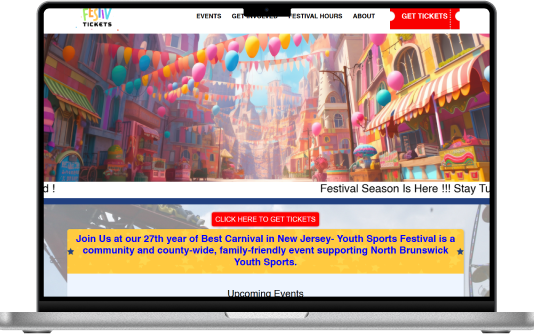
Ticket commerce
Festive Tickets
Explore the project’s booking flow, ticket management and organiser tools in the existing case study.
Read the project story →Project visuals and descriptions from Akkenna’s existing portfolio. No performance figures are implied.
14 Questions
Frequently asked
Should I build on Shopify or a custom platform?
Shopify makes sense for most product-based stores — it's fast to launch and easy to manage day to day. A custom or headless build makes sense when you need specific functionality Shopify doesn't support well, like complex B2B pricing or an unusual checkout flow.
What's the difference between building for B2C and B2B?
B2C is optimised for fast, low-friction checkout and mobile browsing. B2B usually needs account-based logins, tiered or negotiated pricing, quote requests, and bulk ordering — a fundamentally different buying flow, not just a different theme.
Which payment gateways do you integrate?
Razorpay, Stripe, PayPal, UPI, and cash on delivery are common defaults for the Indian and international markets we build for — the right mix depends on where your customers are and how they expect to pay.
Can you migrate an existing store to a new platform?
Yes — product catalogues, customer data, and order history can typically be migrated across platforms, with redirects set up so existing product links and search rankings aren't lost.
How does AI actually help an ecommerce store?
Mainly in product discovery and support — recommendations, natural-language search, and first-line chat support. It speeds up parts of running the store; it doesn't replace deciding what to sell or who you're selling it to.
How it comes together
A clear path from brief to handover.
- STEP 01
Map catalogue, payment and fulfilment needs.
- STEP 02
Design and build the agreed store experience.
- STEP 03
Test ordering scenarios and prepare the operational handover.
Before we begin
Clear inputs. Fewer surprises.
What to bring to the conversation
Product data, images, policies, payment-provider arrangements and fulfilment rules.
You do not need a perfect brief. Start with what you know.What shapes the quote and timeline
Catalogue complexity, platform choice, integrations, migration and custom checkout needs.
Scope and delivery dates are confirmed after reviewing the requirements—not promised before the brief.Let’s make a start
Tell us what you have in mind.
Share the challenge behind your e-commerce development project. We can then discuss the scope and the most useful next step.
- What does your business need to achieve?
- What do you already have in place?
- Is there a target launch date or budget range?
Read our privacy policy before sending your enquiry.
E-commerce Development · project enquiry
One connected team