Brand Strategy vs Brand Identity: What’s the Difference?
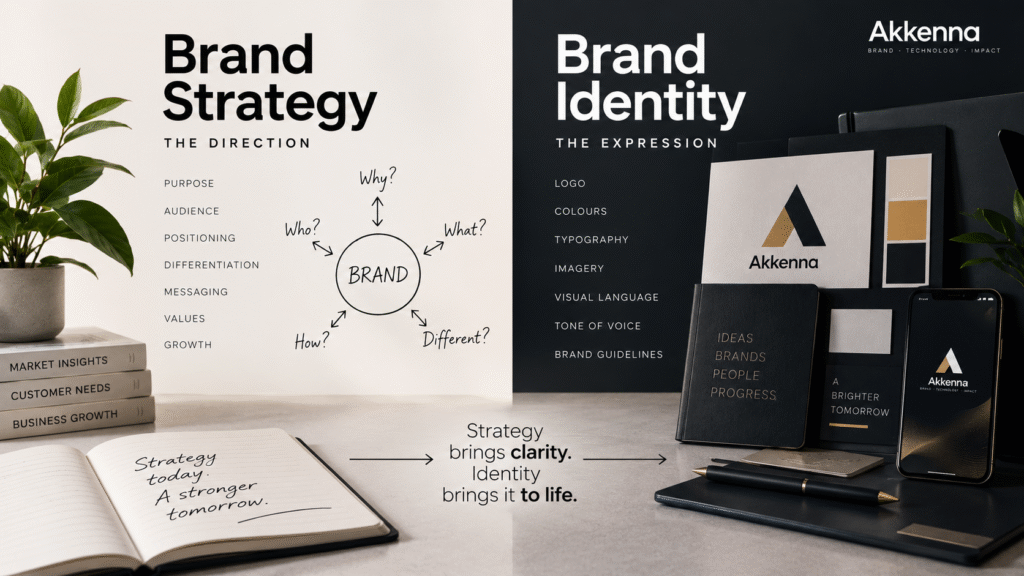
Most business owners have run into both terms — often in the same conversation, sometimes used to mean the same thing. A designer asks about your “brand identity,” a consultant asks about your “brand strategy,” and it’s easy to assume they’re just two words for the same deliverable.
They’re not. Brand strategy vs brand identity is one of the more common points of confusion in business branding, and getting it wrong usually means paying for the wrong thing first — or paying for a redesign twice.
Here’s the short version: brand strategy defines what your brand should stand for, who it should serve, how it should be positioned, and how it should be perceived. Brand identity turns that strategic direction into a recognisable visual and verbal system — the logo, colours, typography, imagery, and voice people actually see and hear.
Strategy provides the direction. Identity provides the expression.
This article walks through what each one actually covers, how they work together, and how to figure out which one your business needs right now.
What Is Brand Strategy?
Brand strategy is the thinking that happens before any design work starts. It’s less about how a brand looks and more about what it means — to the business, and to the people it’s trying to reach.
A solid brand strategy answers questions like:
- Who are we trying to reach?
- What problem do we solve?
- What makes us different from competitors solving the same problem?
- Why should customers choose us over the alternatives?
- How should customers perceive us?
- What should our brand stand for?
- What should we be known for, three or five years from now?
None of these questions involve a colour palette or a font. They’re business questions, and answering them properly usually takes research and honest internal discussion — not a mood board.
Key Elements of Brand Strategy
- Brand purpose — why the business exists beyond making money.
- Target audience — who the brand is actually built for.
- Brand positioning — where the brand sits relative to competitors in the customer’s mind.
- Competitor differentiation — what genuinely sets the brand apart.
- Brand promise — what customers can consistently expect.
- Brand values — the principles that guide decisions.
- Brand personality — the human traits the brand would have if it were a person.
- Messaging strategy — the core ideas the brand repeats across channels.
- Value proposition — the specific value delivered to the target audience.
- Brand voice — the tone and style behind that messaging.
Individually, none of these elements is complicated. Together, they form the strategic foundation everything else — including identity — gets built on. Skip this step, and identity work tends to default to personal taste rather than business logic.
What Is Brand Identity?
Brand identity is how that strategic direction becomes visible, audible, and recognisable. It’s the system of visual and verbal elements that let someone identify a brand instantly and consistently, across every touchpoint.
It’s worth saying plainly: a brand identity is not just a logo. A logo is one piece of a larger system.
Key Elements of Brand Identity
- Logo and logo variations (primary mark, icon, monogram, horizontal/vertical lockups)
- Colour palette
- Typography
- Imagery style
- Iconography
- Graphic elements and patterns
- Layout principles
- Brand voice and tone of voice
- Messaging style
- Brand guidelines that document how it all fits together
These elements aren’t meant to be picked in isolation — a nice logo here, a trendy colour there. They work as a system. Typography should feel consistent with the imagery style. Colour should reinforce the personality strategy defined earlier. When identity elements are chosen without that connective thread, a brand can look polished individually while feeling inconsistent as a whole.
Brand Strategy vs Brand Identity: The Key Difference
This is really where brand strategy vs brand identity comes down to one distinction: strategy defines direction, identity expresses it.
| Brand Strategy | Brand Identity | |
|---|---|---|
| Primary purpose | Defines direction | Expresses the brand |
| Main question | What should our brand stand for? | How should our brand look and sound? |
| Focus | Positioning and perception | Visual and verbal expression |
| Includes | Audience, positioning, values, promise | Logo, colours, typography, imagery, voice |
| Developed | Generally before identity | After strategic direction |
| Outcome | Clear brand direction | Consistent brand expression |
| Used by | Leadership, marketing, product, sales | Marketing, design, content, digital teams |
Put simply: brand strategy is the blueprint. Brand identity is what gets built from that blueprint. A blueprint without a building is just a plan; a building without a blueprint tends to have structural problems no one notices until later.
Brand Strategy vs Brand Identity: A Simple Example
Take a premium wellness brand.
Brand strategy for this business might define:
- Target audience: affluent, health-conscious customers who value personalised care
- Positioning: personalised, premium wellness — not a mass-market fitness chain
- Personality: calm, credible, sophisticated
- Differentiator: individualised, professional-grade care rather than generic programs
- Desired perception: trustworthy and premium, not gimmicky
Brand identity built from that strategy might include:
- Refined, understated typography
- A muted, sophisticated colour palette
- Editorial-style photography rather than stock fitness imagery
- Calm, uncluttered visual language across the website and app
- A consistently measured tone in all messaging
Each identity choice traces back to a strategic decision. The muted palette reflects “calm” and “sophisticated.” The editorial photography supports the “premium” positioning rather than being a style preference.
Skip strategy and go straight to identity, and a designer might still produce something visually attractive — but there’s no guarantee it communicates premium, personalised care rather than, say, a generic gym. An attractive identity without strategic direction can still fail to differentiate the brand in any way that matters to the customer.
Does Brand Strategy Come Before Brand Identity?
Usually, yes.
A typical sequence looks like this:
Research → Strategy → Positioning → Messaging → Identity → Brand guidelines → Implementation
The logic is straightforward — you can’t design a consistent visual expression of something that hasn’t been defined yet. Trying to build identity before strategy usually means retrofitting meaning onto design choices after the fact.
That said, this isn’t an absolute rule for every business. An established company may already have a visual identity in place — sometimes one that’s worked reasonably well for years — but finds its strategy has drifted from where the market or the business has moved. In that case, the right move is often to revisit strategy first, then decide whether the existing identity still fits or genuinely needs a refresh. Not every strategy review ends in a full rebrand.
What Happens If You Have Brand Identity Without Brand Strategy?
This is more common than it should be. The symptoms tend to show up over time:
- The brand looks good but doesn’t communicate anything specific
- Messaging shifts from platform to platform, with no consistent thread
- Different people on the team describe the brand differently
- The business ends up looking similar to competitors
- Design decisions become subjective — chosen because someone liked them, not because they support a position
- Marketing output feels inconsistent, campaign to campaign
A beautiful logo cannot compensate for unclear positioning. This isn’t a criticism of design — good design still matters — but design without strategic direction is decoration, not branding.
What Happens If You Have Brand Strategy Without Brand Identity?
The reverse problem is just as real, and just as limiting.
- No consistent visual language to express the strategy
- Communication that varies wildly depending on who’s writing it
- Weak brand recognition, since there’s nothing visually distinct to remember
- A digital presence that doesn’t reflect the intended positioning
- Difficulty executing consistently across marketing, sales, and product teams
- A strategy that stays as an internal document rather than something customers actually experience
Strategy provides direction. Identity makes that direction visible and consistent. Without identity, even the best strategy remains theoretical.
Do You Need Brand Strategy or Brand Identity?
This depends on where the business currently stands.
If you’re starting a new business: Start with strategy, then develop identity from it. Building identity first tends to create rework later.
If your business is growing: You may need strategy refinement plus identity development, particularly if early positioning was informal or undefined.
If your brand looks outdated: Consider reviewing strategy before committing to an identity refresh — the visual style might not be the actual problem.
If customers don’t understand what makes you different: Prioritise brand strategy. No amount of design polish fixes unclear positioning.
If customers understand your positioning but your brand looks inconsistent: Prioritise brand identity. The direction is sound; the expression needs work.
Many businesses, especially past the early stage, ultimately need both — just not necessarily at the same time or in the same scope.
Brand Strategy, Brand Identity and Brand Guidelines — How Do They Fit Together?
These three pieces build on each other in sequence:
Brand Strategy defines what the brand stands for and where it’s going.
Brand Identity defines how that strategy looks, sounds, and feels.
Brand Guidelines define how the identity should be applied consistently — logo spacing, colour usage, typography rules, tone of voice examples, and dos and don’ts across different formats and teams.
Without guidelines, even a strong identity tends to drift over time as different people apply it differently. Guidelines exist to keep expression consistent long after the initial design work is done.
What Does a Brand Strategy and Identity Project Include?
Exact deliverables vary by project scope, but here’s what typically falls under each.
Brand strategy may include:
- Brand discovery sessions
- Audience research
- Competitor analysis
- Positioning definition
- Brand purpose and values
- Value proposition development
- Brand personality definition
- Messaging direction
Brand identity may include:
- Logo or mark design
- Logo variations
- Colour system
- Typography selection
- Visual language and imagery direction
- Graphic elements
- Voice and tone documentation
- Brand guidelines
Not every project includes every item on both lists — scope depends on the business’s current stage and specific needs.
How Is a Branding Project Scoped?
Rather than quoting a price here, it’s more useful to understand what actually drives scope and investment in a branding project:
- The business’s current stage (startup vs established company)
- How much research is required
- The depth of strategic work needed
- The complexity of the identity system
- The number of deliverables involved
- The number of brand touchpoints to design for
- Packaging requirements, if relevant
- Digital application needs (website, app, product interfaces)
- Whether comprehensive brand guidelines are required
- Project timeline
Understanding these factors before requesting quotes makes it much easier to compare proposals meaningfully — two agencies quoting very different numbers may simply be scoping very different projects.
How Brand Strategy and Identity Extend Into Digital Experiences
A brand isn’t just experienced through a logo on a business card. For most businesses today, it’s experienced primarily through digital touchpoints:
- Website design
- UI/UX across digital products
- Mobile apps
- Ecommerce experiences
- Digital products and platforms
- Social media presence
- Marketing content
- Customer-facing interfaces of every kind
When branding and technology are treated as separate projects with no shared reference point, the disconnect shows. A website that doesn’t reflect the brand’s typography, tone, or visual language undercuts the strategic work behind the brand. Branding and the digital experience it lives in shouldn’t feel like two unrelated efforts.
Questions to Ask Before Starting a Branding Project
Before committing to a branding engagement, it helps to have clear answers to:
- Who is our target audience?
- What do we want to be known for?
- How are we different from competitors?
- What is our desired market position?
- Do we need strategy, identity, or both?
- What deliverables are included in the proposed scope?
- Will the project include brand guidelines?
- How will the identity be applied across digital platforms?
- Who will own the final brand assets?
- How will feedback and revisions work throughout the process?
Having these answers upfront makes the process smoother and reduces the odds of scope confusion later.
Frequently Asked Questions
Is brand strategy the same as brand identity?
No. Brand strategy defines what a brand stands for, who it serves, and how it should be positioned and perceived. Brand identity is the visual and verbal expression of that strategy — the logo, colours, typography, imagery, and voice. They’re closely connected but solve different problems, and confusing the two often leads to skipping the strategic work altogether.
Which comes first, brand strategy or brand identity?
Generally, brand strategy comes first. It’s difficult to design a consistent visual identity around a direction that hasn’t been defined yet. That said, established businesses sometimes need to revisit strategy before deciding whether an existing identity needs a full refresh or just minor adjustments.
Is a logo part of brand strategy or brand identity?
A logo is part of brand identity. It’s one visual element within a larger identity system that also includes colour, typography, imagery, and voice. The strategic thinking behind why the logo looks the way it does — what it needs to communicate — comes from brand strategy.
Can I create a brand identity without a brand strategy?
Technically, yes — but it’s risky. Without strategic direction, identity choices tend to be based on personal preference rather than business positioning, which often results in a brand that looks fine but doesn’t communicate anything distinct or meaningful to the target audience.
What is the difference between brand identity and brand image?
Brand identity is what a business intentionally creates and controls — the logo, colours, voice, and guidelines. Brand image is how the brand is actually perceived by customers, which is shaped by identity but also by experience, word of mouth, and other factors outside direct control.
What is the difference between brand strategy and brand positioning?
Brand positioning is actually one component within brand strategy, not a separate discipline. Positioning specifically defines where a brand sits relative to competitors in the customer’s mind, while brand strategy is the broader framework that also includes audience, purpose, values, and messaging.
Do small businesses need brand strategy?
Yes, though the depth of the process can scale to fit the business. Even a small business benefits from clarity on its audience, differentiation, and positioning — without it, marketing and design decisions tend to be made inconsistently, which becomes harder to fix as the business grows.
What does a brand identity design project include?
Typically a logo and its variations, a colour palette, typography selection, imagery direction, graphic elements, and documented brand guidelines for consistent application. Scope varies depending on the business’s touchpoints — a company with a complex digital product will need a more extensive identity system than one with a simple print presence.
Build a Brand With Direction, Not Just Design
Understanding brand strategy vs brand identity matters because most branding problems trace back to one being handled without the other — an identity built without direction, or a strategy that never became a consistent customer-facing experience.
Akkenna approaches branding as more than creating a logo. We connect strategic thinking with brand identity, digital experience, and the technology customers actually interact with — from [Brand Strategy] and [Brand Positioning] through to [Brand Identity Design], visual systems, and [Brand Guidelines].
Because a brand today lives largely in digital spaces, we also carry that identity into [Website Design & Development], UI/UX, and broader digital product experiences — so the brand people encounter on a website or app feels like the same brand described in the strategy, not a disconnected version of it.
Ready to build a brand with a clear direction? Talk to Akkenna about your brand strategy and identity.
