How to Advertise a Product on Social Media: A Practical Step-by-Step Guide
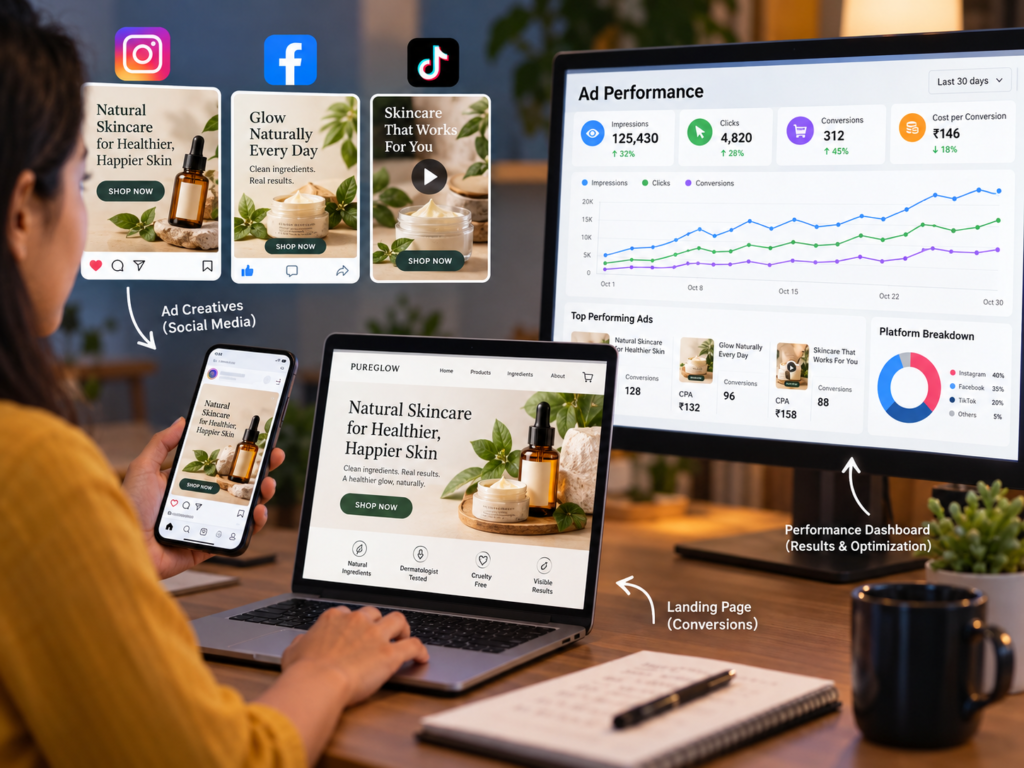
Advertising a product on social media sounds simple: make a post, add a budget, and wait for orders. In practice, many product ads fail for the same reasons. The product isn’t clearly explained, the creative looks like every other ad, the audience is too broad, or the landing page loses people at the last step.
This guide explains how to advertise a product on social media from start to finish. It covers positioning, choosing platforms, creating ad content, structuring campaigns, setting budgets, building the landing page, and measuring results. It’s written for founders, marketers, and small teams selling physical or digital products.
A note before you start: ad platforms update their tools, formats, and policies often. Use this guide for principles, and check each platform’s current help pages before you set up campaigns.
Organic vs Paid: What Does “Advertising” Mean Here?
On social media, you can promote a product in two broad ways:
- Organic: Regular posts, videos, Stories, and community activity that reach your followers and, sometimes, others
- Paid: Ads you pay for, which are shown to chosen audiences based on location, interests, behaviour, or your own customer lists
Most product businesses use both. Organic content builds trust and shows what the brand is about. Paid ads extend reach, test offers, and drive purchases faster. This guide focuses on paid advertising but covers how the two support each other.
Step 1: Get Clear on the Product and Its Positioning
Before creating any ad, answer a few questions:
- Who is it for? The more specific, the better.
- What problem does it solve, or what desire does it meet?
- What makes it different from alternatives?
- What’s the main benefit, in plain language, not just a feature list?
- What objections might buyers have, such as price, quality, fit, or trust?
- What proof can you show, such as reviews, demonstrations, or results?
Ads work when they communicate one clear idea quickly. If you can’t state your product’s main promise in a sentence, the ad won’t be able to either. A well-defined brand strategy helps you decide what to say and why anyone should care.
Step 2: Set a Clear Advertising Goal
Different goals need different campaigns. Common product advertising goals include:
- Awareness: introduce the product to new people
- Traffic: send people to your product page or website
- Engagement: encourage interaction and build audience
- Leads: collect sign-ups, waitlists, or enquiries
- Sales: drive purchases directly
- Retargeting: bring back people who viewed but didn’t buy
Pick one primary goal per campaign. A new product with no audience might start with awareness and testing. An established product with good reviews might focus on sales and retargeting.
Step 3: Understand Your Audience
Define who you’re trying to reach:
- Basics: location, age range, language, and income level where relevant
- Interests and behaviours: what they follow, buy, and watch
- Needs and pain points: what they want solved
- Where they spend time: which platforms and formats they use
- Buying triggers: gifting occasions, seasonal needs, or life events
Use data you already have: customer lists, website visitors, enquiries, reviews, and existing social insights. Many platforms allow you to build audiences from customer lists or website activity, subject to privacy rules and consent requirements that apply to you.
Step 4: Choose the Right Platforms
You don’t need to advertise everywhere. Choose platforms where your product and audience fit.
- Instagram: Strong for visual products such as fashion, jewellery, beauty, food, home, and design. Reels and Stories suit product demonstrations.
- Facebook: Wide reach across age groups, good for local and consumer products, and works alongside Instagram through Meta’s ad tools.
- YouTube: Useful for demonstrations, comparisons, and explaining higher-consideration products.
- LinkedIn: Better for B2B products and professional services, usually at a higher cost per click.
- Pinterest: Suits inspiration-led products such as home, fashion, weddings, and crafts.
- X (Twitter): Useful for news-led, tech, and conversation-driven products.
- Messaging apps: Tools like WhatsApp can support enquiries and follow-up after an ad.
Start with one or two platforms, learn what works, and expand later. Our guide [How to Market Your Business on Facebook] covers that platform in more depth.
Step 5: Create Ad Content That Works
Creative is often the biggest factor in whether a product ad performs. Aim for clarity, relevance, and attention.
Lead with the hook
People scroll quickly. Capture attention in the first second or two with a clear problem, a striking visual, a question, or a bold claim you can back up.
Show the product in use
Don’t only show the product on a plain background. Show it solving a problem, being worn, used, tasted, or compared. Demonstration is one of the most effective ways to convey value. Formats such as product demo videos work well for explaining how something works in a short clip.
Use video where you can
Short-form video is a core ad format on most platforms. Keep it simple: a clear opening, one main message, visible product, captions for silent viewing, and a call to action at the end. For more on producing videos in-house, see [How to Make Professional Videos for Business].
Use authentic content
Creator-style UGC videos show real people using the product in everyday settings, which often feels more trustworthy than polished studio footage. Customer reviews, unboxing clips, and testimonial snippets work in the same way.
Use animation and motion where the product needs explaining
For software, technical products, or products with a complex benefit, an animated 2D explainer video or short motion graphics clip can make an idea clear quickly. Where the product is physical and detailed, a 3D explainer video can show features that are hard to capture on camera.
Write clear copy
Good ad copy is short and specific:
- Headline: the main benefit or hook
- Body text: one or two lines on why it matters
- Offer: price, bundle, discount, free delivery, or guarantee, if relevant
- Call to action: “Shop now,” “Learn more,” “Get yours,” “Book a demo”
Avoid vague claims and anything you can’t support. Different platforms and local rules restrict certain claims, particularly around health, finance, and comparison statements. In India, advertising codes such as those from ASCI apply to many categories, so check current rules for your sector.
Keep the look on-brand
Consistent logo, colours, fonts, and layout make your ads recognisable and professional. A defined brand identity and reusable graphic design templates let you produce several ad variations quickly without losing consistency.
Step 6: Build a Landing Page That Converts
Many product ads lose customers after the click. The page people land on should match the ad and make buying easy.
- Consistent message: If the ad promises a specific product or offer, the landing page should show it immediately.
- Clear product information: Images, description, price, sizing or specifications, and delivery details.
- Proof: Reviews, ratings, testimonials, or guarantees.
- Fast loading: Slow pages lose visitors, especially on mobile.
- Mobile-friendly design: Most social traffic comes from phones.
- Simple purchase path: Few steps, clear buttons, and trusted payment options.
- Contact options: Visible ways to ask questions.
Good web design and development and dependable e-commerce development give you the structure for product pages, checkout, and tracking. Thoughtful UI/UX design makes the path from ad to purchase smooth.
Step 7: Set Up Tracking Before You Spend
Install the tracking tools your ad platform recommends, such as pixels or conversion APIs, so you can measure purchases, add-to-carts, and leads. Test that events fire correctly before you start spending. Follow privacy and consent requirements that apply to your audience and location.
Without tracking, you’ll see clicks but not know which ads lead to sales.
Step 8: Structure Your Campaigns
A simple structure makes testing and learning easier. Many advertisers organise campaigns by funnel stage.
Top of funnel: reach new people
Introduce the product to cold audiences using broader targeting and attention-grabbing creative. The goal is awareness, engagement, or traffic.
Middle of funnel: warm up interested people
Show more detail to people who watched your videos, visited your page, or engaged with your content. Use proof, comparisons, and answers to common questions.
Bottom of funnel: convert
Retarget people who viewed products, added to cart, or started checkout. Offers, reminders, reviews, and limited-time incentives can help close the sale.
Retention: bring customers back
Advertise to existing customers with new products, refills, accessories, and loyalty offers. Repeat buyers often cost less to reach than new ones.
Within each stage, test a few ad variations: different hooks, visuals, headlines, and offers. Change one element at a time so you can see what’s making the difference.
Step 9: Decide Your Budget
There’s no universal budget. It depends on your product price, margin, competition, and goals. Some practical principles:
- Start modestly, then scale what works.
- Know your numbers: product price, cost, margin, and how much you can afford to pay to acquire a customer.
- Allow enough budget and time to learn. Very small, short tests can be misleading.
- Don’t change everything at once. Give campaigns time to gather data.
- Keep some budget for retargeting, which often performs well.
- Plan for creative refresh, since ads can tire as audiences see them repeatedly.
Professional performance marketing can help set up structure, targeting, creative testing, and reporting if you want support with managing spend.
Step 10: Combine Ads With Organic Content and Influencers
Ads work better when your profile and content support them. People who see an ad often check your page before buying, so make sure it looks active, consistent, and trustworthy. Ongoing social media marketing keeps your organic presence strong, and a documented content strategy ensures your posts and ads tell the same story.
Influencers and creators can also help. Choose people whose audience matches your customer and whose style suits your brand, agree on deliverables and usage rights, and make sure paid partnerships are disclosed properly under platform rules and local guidelines. Some brands also use creator content as ad creative, with permission.
Step 11: Measure, Learn, and Improve
Track results against your goal. Common metrics include:
| Goal | Useful metrics |
|---|---|
| Awareness | Reach, impressions, video views, cost per thousand impressions |
| Traffic | Link clicks, click-through rate, cost per click, landing page views |
| Engagement | Reactions, comments, shares, saves |
| Leads | Cost per lead, form completion rate |
| Sales | Purchases, conversion rate, cost per purchase, return on ad spend |
| Retention | Repeat purchase rate, customer lifetime value |
Return on ad spend (ROAS) compares revenue from ads with what you spent on them. It’s a useful signal but should be considered alongside profit margin, returns, and repeat purchases.
Review performance regularly:
- Pause or rework ads with poor results after enough data
- Scale ads and audiences that perform
- Refresh creative when performance drops
- Check the whole funnel, since a weak landing page can make good ads look bad
- Document learnings so you can apply them to future products
Product Advertising Ideas by Type of Product
- Fashion and accessories: Styling videos, lookbooks, customer photos, and catalogue ads. See [15 Fashion Marketing Tips to Grow Your Brand Online] for more.
- Food and beverages: Close-up videos, recipes, taste reactions, and limited-time offers.
- Beauty and personal care: Demonstrations, routines, ingredient explanations, and reviews, with careful, honest claims.
- Home and lifestyle products: Room settings, before-and-after, and use-case videos.
- Gadgets and electronics: Demonstrations, comparisons, and feature explainers.
- Software and digital products: Short demos, tutorials, case studies, and free trials.
- B2B products: Case studies, problem-solution explainers, and lead-generation offers.
Common Mistakes When Advertising a Product on Social Media
- Advertising with no clear goal. Know whether you want awareness, leads, or sales.
- Targeting too broadly or too narrowly. Test and refine audiences.
- Weak creative. Generic images and unclear messages fail to stop the scroll.
- Sending traffic to a poor landing page. Clicks are wasted if the page doesn’t convert.
- Skipping tracking. You can’t improve what you can’t measure.
- Changing too many variables at once. You won’t know what worked.
- Giving up too early, or continuing too long with ads that clearly aren’t working.
- Making unsupported claims. It can breach rules and damage trust.
- Ignoring comments and messages on ads. Prospects ask questions there, so reply promptly.
- Relying only on discounts. Constant offers can weaken perceived value.
- Treating ads as separate from the brand. Inconsistent visuals and tone confuse customers.
- Not refreshing creative. Audiences tire of seeing the same ad.
A Quick Product Ad Launch Checklist
- Product positioning and main benefit defined
- One clear goal for each campaign
- Audience and platforms chosen
- Ad creative prepared in a few variations, including video
- Copy and call to action written, with claims checked
- Landing page matches the ad, loads fast, and works on mobile
- Tracking installed and tested
- Campaign structure and budget decided
- Profile, comments, and messages ready to handle responses
- Review schedule and success metrics set
Final Thought
Advertising a product on social media works when a clear product message meets the right audience in a format that’s easy to understand, backed by a landing page that makes buying simple. Start with one product and one goal, test a few creatives, measure carefully, and build on what works.
If you’d like help with product videos, ad creative, landing pages, or managing campaigns, talk to Akkenna.
FAQ
How do I advertise a product on social media? Define the product’s main benefit and audience, choose a goal and platforms, create clear ad content, build a landing page that matches, set up tracking, structure campaigns by funnel stage, test creative, and measure results.
Which social media platform is best for advertising products? It depends on the product and audience. Instagram and Facebook suit many consumer products, YouTube suits demonstrations, Pinterest suits inspiration-led categories, and LinkedIn suits B2B products.
How much should I spend on social media ads? There’s no fixed amount. Start with a modest budget, know your product margins and acquisition cost limits, and scale what performs. Very small, short tests may not give reliable data.
What kind of ad content works best for products? Short videos that show the product in use, authentic customer content, clear demonstrations, and strong, simple messages tend to work well. Test several formats to see what suits your audience.
Should I use influencers to advertise my product? They can help if the creator’s audience and style match your brand. Agree clear deliverables and disclosures, and track results like any other channel.
How do I know if my social media ads are working? Compare results to your goal using metrics such as cost per lead, cost per purchase, conversion rate, and return on ad spend, alongside profit margins and repeat purchases.
Do I need a website to advertise a product on social media? It’s strongly recommended. A website or product page gives customers a place to learn, trust, and buy, and it lets you track conversions properly.
How long does it take for social media ads to work? It varies by product, audience, and budget. Allow time to gather enough data, and be prepared to test and refine creative and targeting rather than expecting instant results.
