What Makes Good Packaging Design?
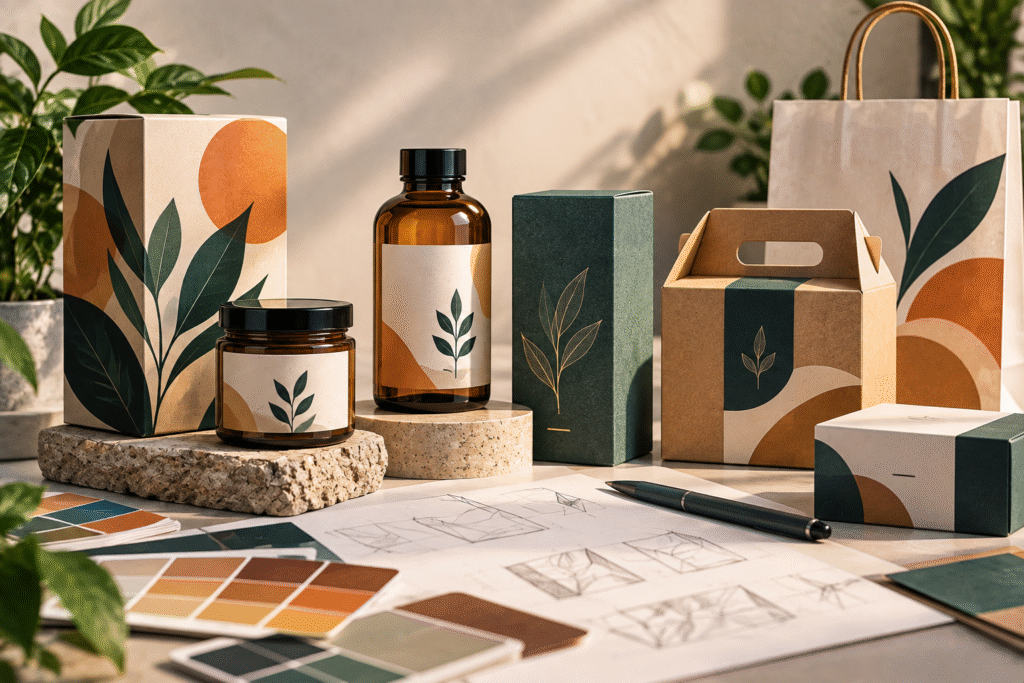
Good packaging design balances three things at once: it protects and functions properly, it communicates what the product is and who it’s for, and it looks distinct enough to be chosen over competitors on the same shelf. Packaging that gets only one of these right usually underperforms, no matter how good the other two are.
The 7 traits of good packaging design
1. Instant clarity. A shopper should understand what the product is within a second or two, without reading a paragraph of text. Category cues, colour, imagery and typography all do this work before a single word is read.
2. Distinctiveness on the shelf. Good packaging doesn’t just look nice in isolation, it stands out next to competitors it will actually sit beside. This usually means one deliberate point of difference, an unusual colour, a distinct shape or a specific material, rather than trying to be different everywhere at once.
3. Genuine brand consistency. The colours, typography and tone on the pack should match the website, social media and everywhere else the brand shows up. Inconsistent packaging is one of the fastest ways a brand starts to feel disorganised. See how packaging influences consumer behavior for what this costs in practice.
4. Functional reliability. It needs to protect the product, be easy to open and reseal where relevant, and hold up during transport and storage. Indian research consistently shows that functional failures, hard-to-open packs, poor protection, damage buyer satisfaction regardless of how attractive the design looks.
5. Honest, clear information. Ingredients, net weight, usage instructions and any required certifications should be easy to find and read, not buried in small print. This builds trust and, in regulated categories, keeps the packaging compliant.
6. Material that matches the product’s positioning. A premium jewellery box and a everyday grocery pack use materials for different reasons, one to signal luxury, the other to be practical and cost-efficient. Good design chooses the material to match what the brand is actually trying to say.
7. Room to work across formats. A pack often needs to look right on a physical shelf, in a product photo, in a delivery box and sometimes in an unboxing video. Good design considers all of these, not just the one context it was designed for.
Where packaging design commonly goes wrong
Weak packaging tends to fail in a few predictable ways:
- Prioritising decoration over clarity. Beautiful but confusing, so the shopper has to work to understand what the product actually is.
- Copying the category too closely. Blending in with every other product on the shelf instead of finding one clear point of difference.
- Ignoring function for the sake of looks. A striking pack that’s hard to open or doesn’t protect the product loses trust fast, even if it wins the first purchase.
- Designed in isolation from the rest of the brand. A pack that doesn’t match the website or social content undermines the recognition a brand has built elsewhere.
A simple framework for judging packaging design
| Question | What it tests |
|---|---|
| Can someone tell what this is in 2 seconds? | Clarity |
| Would it stand out next to 5 competitors? | Distinctiveness |
| Does it look like it belongs to the rest of the brand? | Consistency |
| Is it easy to open, use and reseal? | Function |
| Is the required information easy to find? | Compliance and trust |
If a pack fails more than one of these, it’s worth a review before investing further in it.
Good packaging design is a system, not a single decision
Good packaging rarely comes from one clever visual idea. It comes from testing a design against real competitors, checking it works functionally, and making sure it connects back to the same brand identity customers see everywhere else. Treated as a one-off task, packaging tends to drift from the rest of the brand over time.
If your current packaging isn’t doing all three jobs at once, clarity, distinctiveness and function, it may be time to design your packaging system properly rather than adjust it piece by piece. Akkenna, a holistic branding agency in Coimbatore, designs packaging as part of a full brand identity, so it looks, functions and sells as one connected system.
Frequently asked questions
Does good packaging design cost significantly more?
Not necessarily. Cost depends more on materials and production complexity than on design quality. A well-thought-out design at a modest budget usually outperforms an expensive one built without a clear strategy.
How important is sustainability in packaging design?
Increasingly important. Indian research shows a growing share of consumers prefer eco-friendly packaging and are willing to pay more for it, so sustainable materials can be a genuine point of difference, not just a compliance box to tick.
Should packaging design change with every product update?
Not automatically. Since a large share of consumers switch brands after disliking a redesign, changes should be tested with real customers before a full rollout, not just approved internally.
Can small businesses compete with big brands on packaging?
Yes. Distinctiveness and clarity matter more than production budget. A small business with a clear, well-designed pack can outshine a bigger competitor with a generic one.
Want packaging that actually sells?
A short brand audit shows whether your packaging is helping or hurting your sales, and what to fix first. Book a brand audit with the Akkenna team.
