
Jewellery marketing: how to increase sales
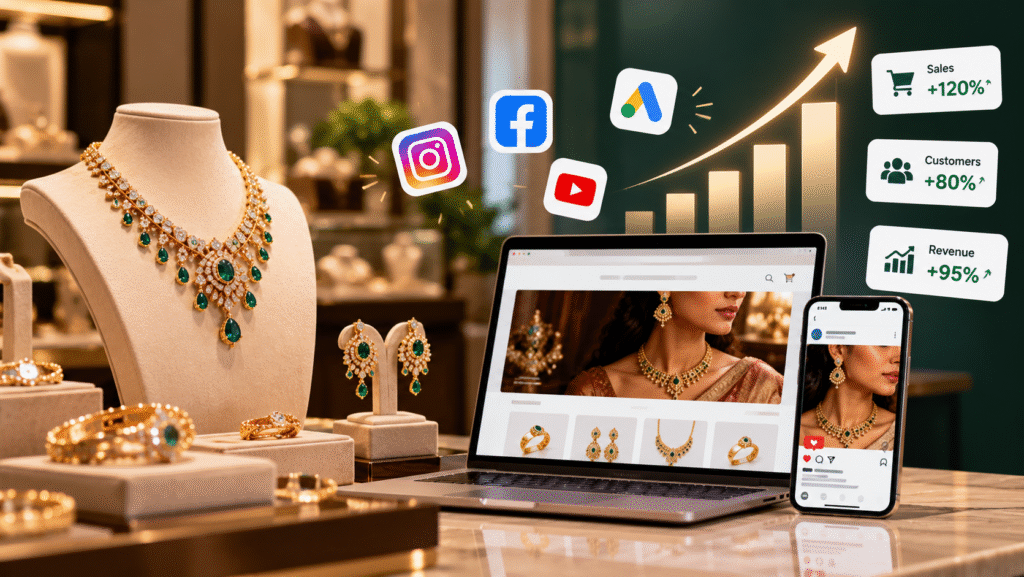
To increase sales in jewellery, match your marketing to how buying behaviour has actually shifted: toward lightweight, everyday gold, self-purchase by financially independent women, and repeat customer relationships rather than one-off festive transactions. India’s jewellery market is projected to reach $140 billion by 2029, up from $67 billion in 2023, and the brands growing fastest are the ones adapting to these shifts, not just running festive discounts.
The market is growing, but buying behaviour has changed
Three shifts are reshaping who buys jewellery and why, and marketing built around the old assumptions is losing ground:
1. Lightweight, high-rotation jewellery is rising. With gold prices at record highs through 2026, retailers are rethinking merchandising toward lighter, more affordable pieces that customers buy more often, rather than heavy, occasional-purchase pieces.
2. Self-purchase by women is a major growth driver. Industry reporting through 2026 highlights those financially independent women are increasingly buying jewellery for themselves, not only as gifts or for occasions, boosting demand for lightweight gold and diamond pieces across both metros and smaller cities.
3. Repeat customers matter more than first-time conversions. Jewellery retail is shifting from event-based transactions, weddings, festivals, one-off gifting, toward long-term customer relationships, with repeat buyers now seen as the most reliable driver of profitability and stability.
What’s working for the brands growing fastest
Real examples from the Indian market in 2026 point to a consistent pattern: growth is coming from strategy realignment, not discounting alone.
- Divine Solitaires reported 30-35% growth in FY26 after restructuring its strategy across product, retail and consumer engagement, driven by younger buyers, certified diamond demand and expansion to 215 stores across 108 cities.
- Kalyan Jewellers increased its marketing and promotions spend by 7% year-on-year in Q2 FY26, citing consistent brand messaging with local relevance as one of its core competitive strengths.
- P N Gadgil Jewellers recorded ₹170.7 crore in Gudi Padwa sales, up 38% year-on-year, and ₹365 crore during a single Foundation Day offer, both tied to festive timing paired with clear promotional offers.
- Discounting alone is losing power. Industry commentary through early 2026 notes that margin pressure and shifting customer behaviour are eroding the effectiveness of habitual discounting, pushing retailers toward pricing discipline and stronger brand value instead.
The pattern across these examples: sales grow when marketing builds consistent brand trust and adapts merchandising to real demand, and slows when it relies only on price cuts.
How to increase jewellery sales: a practical approach
1. Build a consistent brand identity across every touchpoint. In a trust-driven, high-consideration category, a brand that looks and sounds different across its showroom, website and social media loses credibility before a customer even asks a price. See what brand identity services include for what this covers.
2. Shift merchandising and messaging toward everyday, lightweight pieces. With rotation-focused buying on the rise, marketing that only pushes heavy, occasion-only pieces misses a growing share of demand, especially from self-purchasing customers.
3. Speak directly to the self-purchasing customer. This is a distinct buyer from the traditional gifting or bridal customer, and needs different messaging: about personal style and everyday wear, not only occasions and tradition.
4. Invest in visual and UGC content. Jewellery is a highly visual, considered purchase. Customer photos, short videos and before/after styling content build the trust that a product description alone can’t. See how to use UGC for examples from Indian brands like Nykaa and CaratLane.
5. Plan for festive peaks without over-relying on them. Akshaya Tritiya, Dhanteras and Diwali remain major demand drivers, but with discounting losing its edge, festive campaigns need real value: exclusive collections, buying schemes and genuine offers, not blanket discounts alone.
6. Build for repeat purchase, not just the first sale. Loyalty touchpoints, personalised follow-up and a consistent brand experience turn a first-time buyer into a repeat one, which industry data shows is now the more reliable growth driver.
7. Strengthen local and online search visibility. Most jewellery purchases still start with local discovery, a nearby showroom, a trusted name, so local SEO and a strong online presence matter alongside in-store experience.
Jewellery marketing priorities, by buyer type
| Buyer type | What they respond to | Where to reach them |
|---|---|---|
| Self-purchasing women | Everyday style, personal expression | Instagram, UGC, lightweight collections |
| Bridal/gifting customers | Trust, tradition, certification | Website, in-showroom experience, referrals |
| Repeat/loyal customers | Consistency, recognition, personalised offers | Email, WhatsApp, loyalty programmes |
| Festive/occasion buyers | Timely offers, exclusive collections | Local SEO, festive campaigns, in-store promotions |
Common mistakes that slow jewellery sales
- Relying on discounts as the main strategy, which industry data shows is losing effectiveness as customers become more price-aware.
- Marketing only to the traditional gifting occasion, missing the growing self-purchase segment entirely.
- Inconsistent branding between showroom, website and social media, which undermines trust in a category where trust decides the sale.
- No plan beyond festive spikes, leaving long stretches of the year without a clear marketing focus.
Build a jewellery marketing system, not a festive calendar
The jewellery brands growing fastest right now are the ones treating marketing as an ongoing system, consistent brand identity, content built for how customers actually buy now, and a real strategy for repeat purchase, not a once-a-year festive push. If you want to grow your jewellery brand with marketing built around how customers buy today, start with a short brand audit. Akkenna, a holistic branding agency in Coimbatore with direct experience in jewellery marketing, builds brand identity, content and campaigns around real buying behaviour, not just the festive calendar.
Frequently asked questions
What is the fastest way to increase jewellery sales?
There’s no single fastest way, but consistent brand trust combined with content that speaks to how customers actually buy now, especially self-purchasing women and repeat customers, tends to outperform discount-led campaigns over time.
Do discounts still work for jewellery marketing?
They can drive short-term spikes, especially around festivals, but industry data from 2026 shows habitual discounting is losing its power as a long-term strategy. Value-led offers and stronger brand positioning perform more reliably.
How important is social media for a jewellery business?
Very. Jewellery is a highly visual, considered purchase, and customers often research and compare styles on Instagram before visiting a showroom or website.
Should a small jewellery business focus on festivals or everyday marketing?
Both, but not equally. Festive campaigns still drive real spikes, but with lightweight, high-rotation jewellery on the rise, everyday marketing to self-purchasing and repeat customers is increasingly where sustained growth comes from.
How does branding affect jewellery sales specifically?
Jewellery is a high-trust, high-consideration category, so inconsistent branding directly undermines the confidence customers need before a purchase. A consistent identity across showroom, website and social media supports every other marketing effort.
Ready to grow your jewellery brand?
A short brand audit shows where your jewellery marketing is missing today’s buyer, and what to prioritise. Book a brand audit with the Akkenna team.
