QUALITY STRATEGY · RELEASE PROCESS · TEAM ENABLEMENT
QA Consulting Services
Give quality a clear place in the delivery process.
When testing happens late, priorities are unclear or releases depend on last-minute checks, a better process starts with the evidence. Akkenna reviews how your team plans, tests and releases software, then helps define practical improvements with clear ownership.
Based in Peelamedu, Coimbatore · Working with your product and development team.
01 / THE SCOPE
A quality plan that fits the product and the team.
A QA review can focus on one release problem or the wider delivery process. The engagement should produce usable decisions, not a generic maturity score without context.
Current-process assessment
Review requirements, handovers, test planning, defect handling and release decisions. Compare how the process is documented with how the team actually works.
Interviews · Artefact review · Process map
Risk and coverage planning
Connect product risks and critical journeys to the testing effort. Identify blind spots, duplicated checks and areas that need specialist review.
Critical paths · Coverage map · Priorities
Test strategy and ownership
Define responsibilities, environments, test data, review points and the evidence required to make a release decision.
Roles · Entry and exit criteria · Governance
Automation planning
Assess candidates by stability, repeatability, maintenance effort and value. Agree a pilot before committing to a large automation programme.
Candidate list · Pilot scope · Maintenance model
Tools and workflow integration
Review how the team records cases, issues and execution evidence. Recommend changes that fit the existing delivery tools and access constraints.
Issue workflow · Traceability · Tool requirements
Team guidance and adoption
Turn recommendations into working templates, review routines and agreed coaching sessions. Implementation and ongoing testing can be scoped separately.
Templates · Workshops · Adoption plan
02 / A PRACTICAL EXAMPLE
A useful diagnostic connects a symptom to a question.
The following example illustrates how a consulting review can turn a familiar release problem into an investigation and a practical output. These are not findings about an existing client.
Illustrative QA diagnostic — not a completed client assessment.
| Situation to investigate | Question to ask | Possible review output |
|---|---|---|
| Bugs return after fixes | Which changed dependencies are included in regression checks? | A prioritised regression set with change-impact review. |
| Testing starts late | When are acceptance criteria and test data available? | Earlier review points and a shared readiness checklist. |
| Automated checks are ignored | Which failures are product defects, unstable tests or environment issues? | A triage process and a smaller trusted pilot suite. |
| Release decisions are unclear | Who accepts open issues, and what evidence do they see? | A release summary template and named decision owner. |
| Teams duplicate work | Where do responsibilities overlap or fall between teams? | An ownership map and explicit handover criteria. |
Recommendations follow the evidence available in your engagement. A process review does not guarantee fewer defects, lower costs or a fixed release speed.
03 / HOW THE ENGAGEMENT WORKS
Move from an assessment to agreed changes.
Agree the review
Define the business problem, stakeholders, available evidence and decisions the engagement should support.Output: review scope and information request.
Understand the current state
Walk through a recent change or release and inspect representative requirements, test records and issues.Output: process map and evidence-backed observations.
Prioritise the gaps
Compare the impact of each problem with implementation effort and dependencies.Output: a prioritised findings list.
Design the improvements
Prepare the selected workflow, templates, ownership rules or pilot plan with the people who will use them.Output: practical working assets and agreed responsibilities.
Review adoption
Use an agreed follow-up to inspect what changed, what remains blocked and where the plan needs adjustment.Output: an updated roadmap and next decisions.
04 / WHAT YOU RECEIVE
Recommendations that lead to specific work.
The written proposal defines the deliverables, execution effort, review rounds and handover included.
- 01
Current-state assessment
A documented view of the reviewed process, evidence, constraints and gaps.
- 02
Quality strategy
A proposed approach to risk, coverage, environments, data, ownership and release evidence.
- 03
Prioritised roadmap
Actions organised by impact, dependencies and the team responsible for implementation.
- 04
Working templates
Agreed test-plan, issue, readiness or release-summary templates appropriate to the engagement.
- 05
Pilot and enablement plan
A defined first implementation step, review checkpoints and any agreed team guidance.
05 / CLEAR RESPONSIBILITIES
Keep the engagement and responsibilities clear.
Consulting versus execution
An assessment and strategy do not automatically include ongoing test execution. Specify workshops, deliverables, implementation help and hands-on testing separately.
Evidence access
The findings depend on access to representative artefacts and people who understand the work. Use redacted records where confidential information is unnecessary.
Automation and specialist work
An automation recommendation is not an implemented suite. Performance, security and specialist assurance work need their own scope and acceptance criteria.
Ownership after the review
Each proposed change needs an owner and a way to check adoption. Agree how the team will maintain templates, tests, environments and reporting.
06 / PRIORITISE THE WORK
Start with the change the team can actually adopt.
A practical roadmap separates immediate clarity from larger changes that need time, investment or coordination. The sequence is agreed from your current situation.
- NowClarify the release owner, critical user journeys and the evidence required for the next decision.
- NextPilot a better test-data setup, regression approach or issue workflow with a defined team.
- LaterExpand the proven approach, retire redundant work and review whether further automation is useful.
07 / RELATED DEVELOPMENT WORK
Applications with real business rules.
A system with multiple roles and quotation rules shows why requirements and ownership need to be explicit. Win Energie is a related development project; no QA-consulting result or process-improvement metric is claimed for this example.
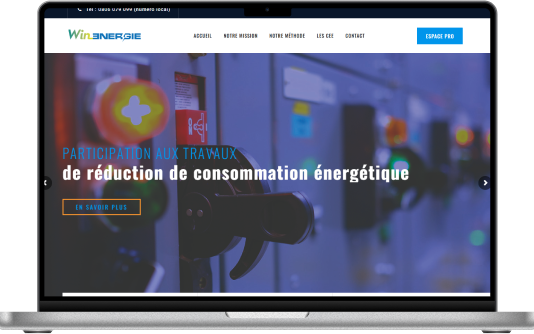
Win Energie
A custom CRM project covering installer matching, quotation workflows, different user roles and shared documentation.
Explore the development project08 / QUESTIONS BEFORE WE BEGIN
Make the scope clear before testing starts.
When is QA consulting useful?
It can help when testing responsibilities are unclear, failures repeat, releases lack usable evidence or the team needs a practical quality strategy. Start with the problem you need to resolve rather than a predefined package.
Can you review our current process without replacing every tool?
Yes. The review can identify what already works and where configuration, ownership or workflow changes may be enough. Tool replacement should follow a demonstrated requirement.
Does the engagement include testing our application?
Only when hands-on testing is part of the agreed scope. Consulting may focus on assessment and planning; execution, automation implementation and ongoing support can be specified separately.
Can you help a small team with limited QA capacity?
We can discuss a focused review around the most important journeys, release checks and responsibilities. The proposal should fit the team’s capacity to act on the recommendations.
Will the recommendations guarantee a defect-free release?
No. QA consulting improves how a team gathers and uses quality evidence. Product risk, implementation, dependencies and remaining coverage limits still need active management.
What will we receive at the end?
The proposal lists the assessment, strategy, roadmap, templates, workshops and follow-up included. Each deliverable should have a clear purpose and owner.
09 / START WITH THE REQUIREMENT
Bring one release problem worth fixing.
Tell us where the quality process breaks down, how your team works today and what you need to decide next. Start through WhatsApp or the working project-enquiry page.
Akkenna · Peelamedu, Coimbatore · +91 99523 25513