What Is Performance Marketing? A Simple Guide for Businesses
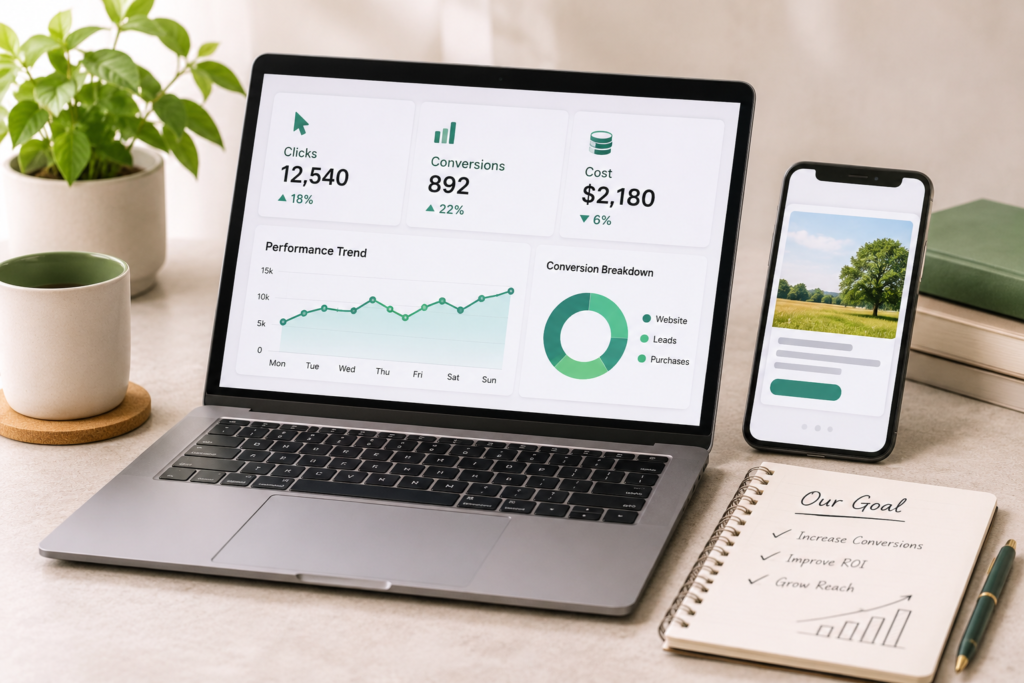
Most marketing has a familiar problem: you spend money, and it’s hard to say what you got for it. Performance marketing tries to fix that. Instead of paying for exposure and hoping for the best, you pay for specific, measurable results, such as clicks, leads, sales, or app installs.
This short guide explains what performance marketing is, how it works, where it’s used, and how to start without wasting budget.
What Is Performance Marketing?
Performance marketing is a form of digital marketing where advertisers pay based on defined actions or results rather than on visibility alone. Every campaign is built around a goal that can be tracked, and spend is judged by what it delivers.
Common results include:
- A click to your website
- A form submission or enquiry
- A phone call or WhatsApp chat
- A purchase
- An app install
- A booking or sign-up
Because results are tracked, you can see which ads, audiences, and channels work, and shift money away from those that don’t.
How Performance Marketing Works
- Set a clear goal. Decide what a “result” is, such as a qualified enquiry or an order.
- Choose channels. Pick platforms where your audience is active.
- Create ads and landing pages. Build creative and a destination matched to the goal.
- Set up tracking. Measure actions using analytics and conversion tracking tools.
- Launch, test, and optimise. Compare audiences, messages, and creatives, then scale what performs.
The key idea is the feedback loop: data from each campaign informs the next decision.
Common Performance Marketing Channels
- Search ads: Reach people actively searching for what you offer.
- Social media ads: Target audiences by interests, location, and behaviour on platforms such as Instagram and Facebook.
- Display and video ads: Build awareness and retarget visitors.
- Marketplace and shopping ads: Promote products where people are already shopping.
- Affiliate and partner marketing: Pay partners for referred sales or leads.
- Messaging-based ads: Ads that open a chat, such as click-to-WhatsApp, to start conversations.
- Influencer and creator campaigns: Paid or commission-based partnerships tied to measurable outcomes.
Key Metrics to Know
| Metric | What it means |
|---|---|
| Click-through rate (CTR) | How often people click after seeing your ad |
| Cost per click (CPC) | What you pay for each click |
| Conversion rate | The share of visitors who complete your goal |
| Cost per lead (CPL) | What you pay for each lead |
| Cost per acquisition (CPA) | What you pay for each customer or sale |
| Return on ad spend (ROAS) | Revenue generated for each unit of ad spend |
Use these alongside your margins. A campaign with a good ROAS can still be unprofitable if costs, returns, or discounts eat into margin, so check results against actual profit.
Performance Marketing vs Traditional and Brand Marketing
Traditional and brand marketing often focus on awareness and reputation, and their impact can be harder to measure directly. Performance marketing focuses on measurable action.
That doesn’t make brand work unimportant. Strong brands often make performance campaigns cheaper and more effective, because people recognise and trust them. A clear brand identity and consistent graphic design across ads and pages help campaigns convert better. The most effective approach usually combines both.
What Makes Performance Marketing Work?
A clear offer and audience
Ads work when they speak to a specific person with a specific need and make a clear offer. Vague messages waste budget.
Strong creative
Short videos, authentic customer content, and simple benefit-led visuals tend to stop the scroll. Options such as creator-style UGC videos and short motion graphics can give you varied creative to test.
A landing page that converts
Many campaigns lose results after the click. The page should match the ad, load fast, work on mobile, and make the next step obvious. Thoughtful web design and development is often the difference between a good campaign and a wasted one.
Reliable tracking
Without accurate tracking, you can’t tell what’s working. Set up conversion tracking before spending, and follow privacy and consent requirements that apply to you.
Follow-up
Leads and chats need quick, helpful responses. Slow follow-up can undo good ad performance. For more on turning interest into conversations, see [What Is Lead Generation? A Practical Guide for Businesses].
Who Should Use Performance Marketing?
It suits many businesses, including:
- Ecommerce brands driving online sales
- Local and service businesses generating enquiries and bookings
- B2B companies collecting qualified leads
- App and software businesses gaining installs and sign-ups
- Brands launching new products and testing demand
It works best when you know your margins, have a clear offer, and have a website or landing page ready to convert.
Common Mistakes
- Starting without a clear goal. Decide what counts as success first.
- Ignoring tracking. You can’t optimise what you can’t measure.
- Judging only by cheap clicks. Cost per qualified lead or customer matters more.
- Sending traffic to a weak page. Poor landing pages waste ad spend.
- Changing too much at once. Test one variable at a time.
- Not refreshing creative. Audiences tire of repeated ads.
- Ignoring margins. Revenue isn’t the same as profit.
- Giving up too early or scaling too fast. Allow enough data, then increase budgets gradually.
How to Get Started
- Define one main goal and a budget you’re comfortable testing with
- Choose one or two channels
- Prepare a landing page and set up conversion tracking
- Create a few ad variations
- Review results weekly, pause what’s weak, and scale what works
Support from a specialist performance marketing team can help with campaign setup, testing, and reporting, while organic social media marketing and a solid content strategy build the visibility and trust that make paid campaigns work harder.
Final Thought
Performance marketing is about accountability: spending on actions you can measure, learning from the data, and improving over time. It works best when paired with a clear brand, a strong offer, and a website ready to convert.
If you’d like help planning campaigns, landing pages, and creative that deliver measurable results, talk to Akkenna.
FAQ
What is performance marketing in simple terms? It’s digital marketing where you focus on, and often pay for, measurable results such as clicks, leads, or sales, rather than just visibility.
What are examples of performance marketing? Search ads, social media ads, retargeting, affiliate marketing, click-to-WhatsApp ads, and shopping ads are common examples.
Is performance marketing the same as digital marketing? Not exactly. Performance marketing is a results-focused part of digital marketing. Digital marketing also includes brand building, content, and organic social media.
How much should I spend on performance marketing? There’s no universal figure. Start with a test budget you can afford, know your margins and target cost per result, and scale what performs.
How do I measure performance marketing success? Track conversions, cost per lead or acquisition, and return on ad spend, and compare them with your profit margins and customer value.
