What Is Lead Generation? A Practical Guide for Businesses
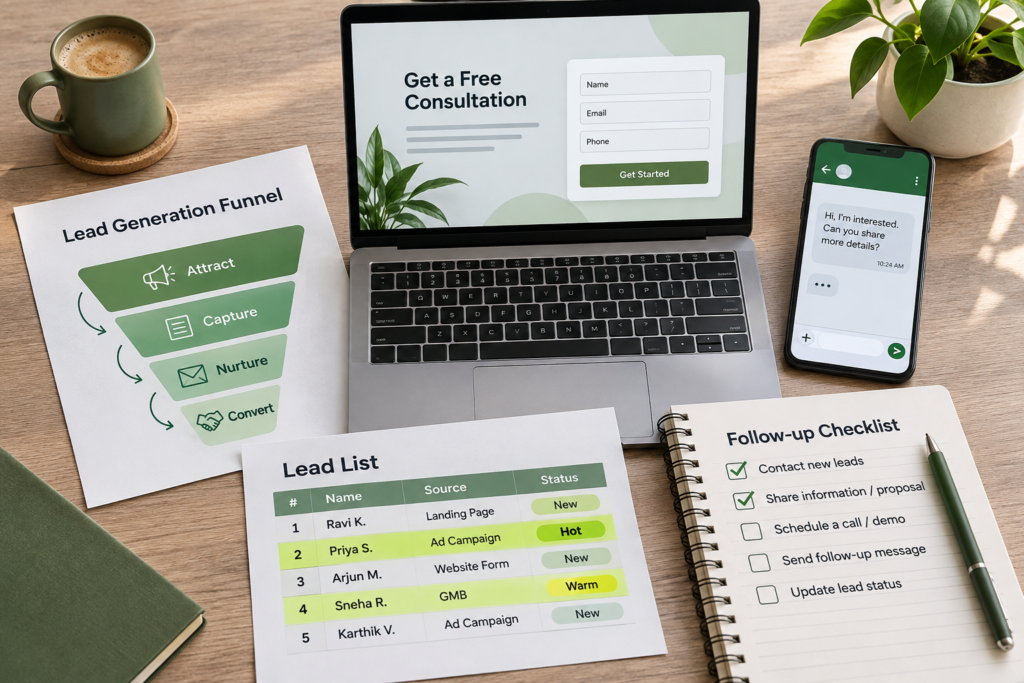
Every business needs customers, but customers rarely appear out of nowhere. Someone first has to notice you, become curious, and take a small step: filling in a form, sending a message, requesting a quote, downloading a guide, or calling your number. That first step is where lead generation begins.
This guide explains what lead generation is, how it works, the main types of leads and lead generation methods, how to build a simple lead generation process, how to measure it, and the mistakes to avoid. It’s written for business owners, marketers, and sales teams, whether you’re a local service business, a B2B company, an ecommerce brand, or a startup.
What Is Lead Generation?
Lead generation is the process of attracting people who may be interested in your product or service and capturing their contact details or enquiry so you can follow up and convert them into customers.
A lead is a person or company that has shown some interest in what you offer and has shared a way to contact them, such as an email address, phone number, WhatsApp message, or form submission.
Lead generation sits between awareness and sales:
- Awareness: People discover your business.
- Lead generation: People show interest and share their details.
- Nurturing and sales: You build trust and help them decide.
- Customer: They buy.
It’s not the same as simply getting website visitors or social media followers. Those are audiences. Leads are people who’ve taken a step towards a conversation.
Why Lead Generation Matters
- It creates a pipeline. A steady flow of leads gives sales teams people to talk to.
- It supports predictable growth. Knowing how many leads you need and where they come from helps you plan.
- It helps you reach the right people. Good lead generation focuses on people who fit your ideal customer profile.
- It builds relationships before the sale. Leads can be educated and nurtured over time.
- It gives you data. You learn what messages, offers, and channels attract interest.
- It reduces dependence on chance. Instead of waiting for referrals or walk-ins, you can build repeatable ways to find customers.
Types of Leads
Not all leads are equally ready to buy. Businesses often group them by how far they’ve progressed.
Information-qualified or cold leads
People who’ve shown light interest, such as downloading a guide or subscribing to a newsletter, but aren’t yet ready to talk to sales.
Marketing qualified leads (MQLs)
Leads who’ve engaged enough with your marketing to suggest genuine interest and who match your ideal customer profile. They might have visited pricing pages, attended a webinar, or opened several emails.
Sales qualified leads (SQLs)
Leads that sales has reviewed and accepted as worth pursuing, often because they’ve asked for a quote, demo, or consultation, and show a fit in budget, need, and timing.
Product or service qualified leads
For businesses offering trials or free plans, these are users who’ve experienced the product and shown signs they’re ready to buy or upgrade.
Referral and returning leads
People who come from recommendations or past customers who return. These often convert well because trust already exists.
The terms vary between companies. What matters is defining your own stages clearly, so marketing and sales agree on what counts as a good lead.
Inbound vs Outbound Lead Generation
Inbound lead generation
You attract people who come to you, usually through useful content and visibility:
- Search engine optimisation and helpful website content
- Blogs, guides, and videos
- Social media presence
- Webinars and events
- Reviews and word of mouth
- Lead magnets, such as checklists and templates
- Paid ads that send people to landing pages
Inbound builds trust and tends to attract people who are already interested, though it can take time.
Outbound lead generation
You reach out to potential customers proactively:
- Cold emails and outreach to selected companies or individuals
- Phone calls and messages, where permitted
- LinkedIn outreach for B2B
- Direct mail and local campaigns
- Participation in trade shows and events
- Partnerships and referral outreach
Outbound can generate results faster in some situations, but it needs careful targeting and respect for privacy and consent rules.
Most businesses combine both, using inbound for steady growth and outbound for targeted opportunities.
Lead Generation vs Demand Generation
These terms are often confused.
- Demand generation builds awareness and interest in your category and brand. It creates the desire to buy through content, thought leadership, and brand building.
- Lead generation captures that interest by turning it into identifiable contacts you can follow up with.
You need both. Without demand, there are few people to capture. Without lead generation, interest never becomes a conversation.
How Lead Generation Works: The Basic Process
A simple lead generation process has five stages.
1. Attract
Draw the right people to your business through content, search, social media, ads, partnerships, and events. The message should address real problems and questions your ideal customers have.
2. Engage
Give visitors a reason to stay and explore, such as helpful pages, clear explanations, videos, and proof of your expertise.
3. Capture
Offer a clear, easy way to take the next step:
- A contact form
- A call or WhatsApp button
- A free consultation or quote
- A downloadable guide, checklist, or template (a lead magnet)
- A webinar or event registration
- A free trial or demo booking
4. Nurture
Not everyone is ready to buy immediately. Stay in touch with useful emails, messages, and content that builds trust and answers questions.
5. Qualify and hand over
Identify leads that fit your ideal customer and are ready to talk, then pass them to sales or your team for a conversation.
Key Elements of a Lead Generation System
A clear target customer
Know who you want to attract: their problems, goals, budget, location, and how they search and decide. A brand strategy with clear positioning helps you speak to the right people, so you attract better-fit leads rather than just more leads.
A strong offer
People need a reason to share their details. Offers can include:
- A free consultation, audit, or quote
- A useful guide, template, or checklist
- A free trial, sample, or demo
- A discount or introductory offer
- A webinar, workshop, or event
- A calculator or assessment tool
The offer should be relevant to your service and valuable enough for the effort of filling in a form.
A professional brand
Trust is a major factor in lead generation. A consistent look, clear messaging, and credible presentation make people more willing to enquire. A thoughtful brand identity and cohesive graphic design across your website, social media, brochures, and ads help you look established and reliable.
A website built to convert
Your website is often the centre of lead generation. It should:
- Explain what you do and who you serve within seconds
- Make it easy to find services, proof, and contact options
- Include clear calls to action on every key page
- Load fast and work well on mobile
- Offer simple forms that ask only for what you need
- Provide multiple ways to get in touch, such as forms, phone, and WhatsApp
Thoughtful web design and development and clear UI/UX design make it easier for visitors to become leads, and for online sellers, reliable e-commerce development supports capturing contact details alongside orders.
Landing pages
A landing page is a focused page built for one goal, such as booking a consultation or downloading a guide. A strong one includes:
- A headline that matches the ad or link that brought the visitor
- A clear benefit and short explanation
- Social proof, such as testimonials or logos, where you have permission to use them
- A short form
- One prominent call to action
- Minimal distractions, such as extra navigation
Lead magnets and content
Content attracts people before they’re ready to buy. A content strategy links topics to the questions your customers ask and to the offers that capture their details. Examples include guides, checklists, templates, how-to articles, comparison pages, case studies, webinars, and videos.
Follow-up and a simple CRM
Capturing leads is only half the job. You need a system to record, track, and follow up with each one. Even a simple spreadsheet works for small businesses, but a CRM makes it easier to manage conversations, reminders, and stages as volume grows.
Common Lead Generation Methods
Search engine optimisation (SEO)
Ranking for searches your ideal customers make brings people who are actively looking. It takes time, but it can deliver steady leads without paying for each click. Useful content, clear service pages, and a technically sound website all contribute.
Content marketing
Blogs, guides, videos, and case studies attract and educate prospects. Content builds credibility and gives people reasons to enquire. Our guide [How to Develop a Marketing Strategy: A Step-by-Step Guide for Growing Businesses] shows how content fits into a broader plan.
Social media
Social platforms help you build awareness, engage prospects, and drive enquiries. Regular social media marketing keeps your business visible, and for planning, see [How to Create an Effective Social Media Strategy].
Paid advertising
Search, social, and display ads can send targeted traffic to landing pages and forms. Done well, they can generate leads faster than organic methods. Structured performance marketing helps connect spend to cost per lead and, more importantly, cost per qualified lead and customer.
Video
Videos can explain complex services, show proof, and build trust. Explainers, demos, and testimonials all help convert interest into enquiries. Options include a 2D explainer video for services, product demo videos for products and software, and creator-style UGC videos for authentic social proof.
Email marketing
Emails nurture leads and keep your brand in mind. Welcome sequences, helpful tips, case studies, and timely offers can move subscribers towards a conversation.
Messaging channels
In many markets, WhatsApp is a primary way customers contact businesses. Click-to-chat buttons, QR codes, and click-to-WhatsApp ads can generate conversations directly. See [How to Advertise on WhatsApp for Business: A Practical Step-by-Step Guide] for more.
Referrals and partnerships
Happy customers and complementary businesses can send high-quality leads. A simple referral process and clear partner materials make it easier.
Events and webinars
Workshops, webinars, trade shows, and local events let you meet prospects, demonstrate expertise, and collect registrations.
Outbound outreach
Targeted emails, LinkedIn messages, and calls can reach specific prospects, especially in B2B. They work best with careful research, relevance, and compliance with consent and privacy rules.
Lead Generation for Different Types of Business
- Local service businesses: Focus on local search, reviews, WhatsApp and phone enquiries, and clear service pages.
- B2B companies: Use thought leadership, case studies, LinkedIn, webinars, gated guides, and account-based outreach.
- Ecommerce: Capture emails and WhatsApp opt-ins through offers, quizzes, and abandoned-cart flows, with consent.
- Real estate: Use project landing pages, video and 3D tours, site-visit booking, and fast follow-up. See [Real Estate Marketing Ideas That Generate Leads].
- Healthcare and wellness: Provide educational content, easy appointment booking, and trust-building information, following advertising and privacy rules.
- Education and training: Use free demo classes, brochures, webinars, and counselling calls.
- Startups: Start with a narrow audience, build a waitlist, and learn from early conversations.
How to Qualify and Score Leads
Not every lead deserves the same attention. Qualification helps sales teams focus on those most likely to buy.
Common qualification factors
- Fit: Does the lead match your ideal customer in industry, size, location, or need?
- Interest: What have they done, such as requested a quote or visited key pages?
- Budget: Can they afford your solution?
- Authority: Are they a decision-maker or influencer?
- Need: Do they have a real problem you can solve?
- Timeline: When do they plan to decide?
Simple lead scoring
You can assign points for actions and characteristics, such as higher scores for requesting a demo or matching your target profile, and lower scores for casual downloads. Review and adjust the scoring with your sales team based on what actually converts.
How to Measure Lead Generation
Track results from first touch to customer, not just the number of leads.
| Metric | What it tells you |
|---|---|
| Number of leads | Overall volume |
| Leads by source | Which channels bring leads |
| Conversion rate (visitor to lead) | How well your pages and offers capture interest |
| Cost per lead | What you spend to acquire each lead |
| Lead quality or qualified lead rate | Whether leads fit your ideal customer |
| Lead-to-customer rate | How many leads become paying customers |
| Cost per customer | Total acquisition cost per customer |
| Sales cycle length | How long it takes to convert |
| Response time | How quickly you follow up |
A source that sends fewer leads but more customers is usually more valuable than one that sends many unqualified enquiries. Always connect lead data to actual sales outcomes where you can.
Compliance, Consent, and Privacy
Lead generation involves collecting and using personal data, so responsible handling matters.
- Get clear consent for contacting people by email, phone, or messaging, and explain how you’ll use their information
- Collect only what you need in forms
- Store data securely and limit access
- Honour opt-outs and unsubscribe requests promptly
- Follow applicable laws and platform policies. Data-protection, telemarketing, and advertising rules vary by country and change over time. In India, check current requirements, including privacy and advertising standards guidance, with a legal adviser
- Avoid buying or scraping contact lists. They damage trust and may breach rules
Ethical practices protect your reputation and give you better-quality leads.
Common Lead Generation Mistakes
- Chasing quantity over quality. Many unqualified leads waste time and money.
- Having no clear target customer. Vague targeting attracts the wrong people.
- Weak or confusing offers. If the value isn’t clear, people won’t share their details.
- Forms that ask for too much. Long forms reduce completions.
- Sending all traffic to a generic page. Focused landing pages convert better.
- Slow follow-up. Leads cool quickly if you don’t respond promptly.
- No nurturing. Many leads need time and information before they’re ready.
- Marketing and sales misalignment. Without a shared definition of a good lead, effort is wasted.
- Ignoring mobile users. Many visitors arrive on phones.
- Not tracking sources and outcomes. You can’t improve what you can’t see.
- Overlooking trust signals. Reviews, case studies, and clear contact details matter.
- Ignoring consent and privacy. It creates legal and reputational risk.
A Simple Lead Generation Plan to Start With
Step 1: Define your ideal customer and goal. Decide who you want to attract and how many leads you need.
Step 2: Choose a clear offer. A consultation, quote, guide, trial, or demo that matches your service.
Step 3: Build or improve your landing page and forms. Keep them focused, fast, and mobile-friendly.
Step 4: Pick two or three channels. For example, search and content, social media, and a small paid campaign.
Step 5: Set up follow-up. Decide who responds, how quickly, and what happens next, and record leads in a simple CRM or spreadsheet.
Step 6: Nurture. Send helpful content to leads who aren’t ready yet.
Step 7: Measure and refine. Review sources, conversion rates, and quality monthly, and adjust.
A Quick Lead Generation Checklist
- Ideal customer and positioning defined
- Clear offers or lead magnets created
- Professional website and brand presence
- Focused landing pages with short forms
- Multiple contact options, including phone and WhatsApp
- Content plan answering real customer questions
- Channels selected and tracked
- Consent and privacy practices in place
- CRM or tracking system set up
- Follow-up process and response times defined
- Lead qualification criteria agreed
- Metrics reviewed monthly, from lead to customer
Final Thought
Lead generation is about turning interest into conversations with the right people. It works best when you know who you want to reach, offer something genuinely useful, make it easy to get in touch, and follow up quickly and respectfully. Start with a clear customer, a focused offer, and a website that converts, then add channels and refine based on what the data tells you.
If you’d like help with positioning, a website and landing pages built to convert, content, or lead-generation campaigns, talk to Akkenna.
FAQ
What is lead generation? Lead generation is the process of attracting people who may be interested in your products or services and capturing their contact details or enquiries so you can follow up and convert them into customers.
What is a lead in marketing? A lead is a person or company that has shown interest in what you offer and has shared a way to contact them, such as filling in a form, sending a message, or requesting a quote.
What are examples of lead generation? Examples include website contact forms, free consultation offers, downloadable guides, webinars, click-to-WhatsApp ads, landing pages with demo requests, newsletter sign-ups, and referral programmes.
What is the difference between inbound and outbound lead generation? Inbound attracts people through content, search, and social media so they come to you. Outbound reaches out proactively through emails, calls, messages, and events. Many businesses use both.
What is the difference between lead generation and sales? Lead generation identifies and captures interested prospects. Sales converts qualified leads into customers through conversations, proposals, and negotiation.
What is a lead magnet? A lead magnet is something valuable offered in exchange for contact details, such as a guide, checklist, template, free audit, webinar, or trial.
How do I measure lead generation success? Track the number and quality of leads, leads by source, conversion rates, cost per lead, lead-to-customer rate, and cost per customer, linking marketing data to actual sales results.
How can small businesses generate leads? Start with a clear offer, a simple website or landing page, local search visibility, social media, WhatsApp and phone enquiry options, reviews, referrals, and fast follow-up. Add paid campaigns once the basics convert.
