What Is Creative Branding? Meaning, Examples, and Ideas for Businesses
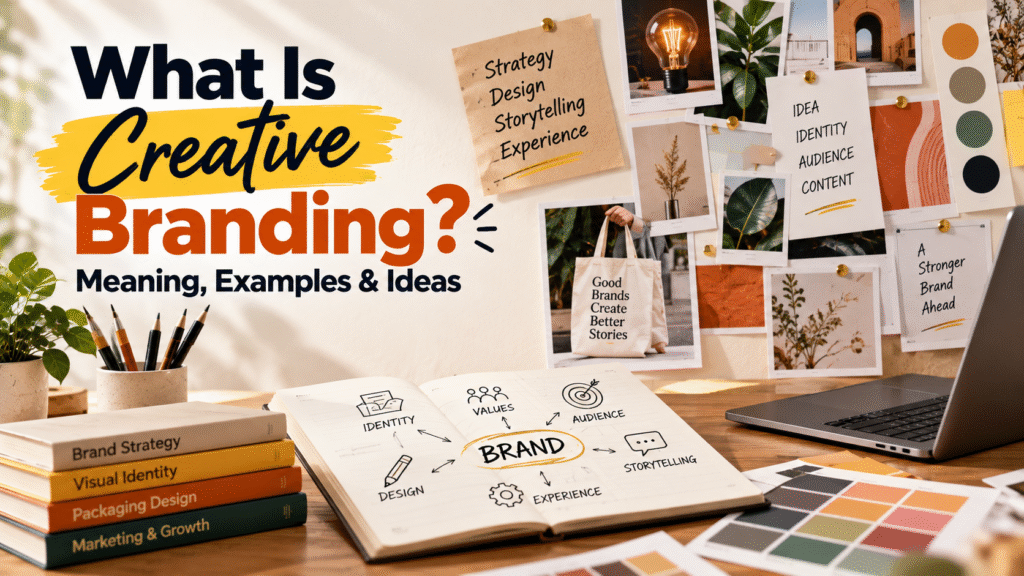
Why do some brands remain memorable even when customers have countless alternatives? Often, the difference lies in how creatively they communicate their identity, tell their story, and connect with their audience.
Creative branding helps businesses move beyond conventional logos, colours, and promotional messages. It combines original ideas, strategic thinking, design, storytelling, and customer experiences to create a brand that people can recognise and remember.
For Indian businesses competing across crowded markets, from jewellery and fashion to healthcare, food, and ecommerce, creative branding offers an opportunity to communicate their value in distinctive ways.
But what is creative branding, how does it work, and how can your business use it effectively? Let’s explore.
What Is Creative Branding?
Creative branding is the process of using original ideas, visual design, storytelling, and distinctive experiences to establish a recognisable and memorable brand identity.
It involves finding creative ways to communicate what your business stands for, what makes it different, and why customers should care.
Creative branding can appear in many forms, including:
- Distinctive logos, colours, typography, and graphic elements.
- Packaging that communicates a product’s personality.
- Brand stories that connect with customers emotionally.
- Advertising campaigns built around original concepts.
- Social media content that reflects a consistent brand voice.
- Collaborations that introduce a brand to new audiences.
- Customer experiences that make a business more memorable.
For example, imagine two businesses selling traditional Indian sweets. Both use quality ingredients and offer similar products. One relies on standard packaging and generic promotional messages, while the other uses contemporary illustrations inspired by regional culture, thoughtful gift packaging, and stories about the origins of its recipes.
The second business has more opportunities to create a distinctive impression without necessarily changing the product itself.
That is the purpose of creative branding: making a brand’s identity and value more meaningful to its intended audience.
Why Is Creative Branding Important for Businesses?
Creativity is useful when it helps a business communicate its value more clearly and distinguish itself from competitors. The objective is not to be unusual for its own sake but to make the brand more relevant and recognisable.
1. It Helps Your Business Stand Out
Customers often encounter several businesses offering similar products or services. If every company uses comparable visuals, messaging, and promotional approaches, distinguishing between them becomes difficult.
Creative branding gives your business an opportunity to develop a recognisable personality.
A boutique clothing brand, for example, might use illustrations inspired by Indian textile traditions, editorial-style photography, and distinctive product storytelling to differentiate itself from competitors relying on generic fashion imagery.
2. It Makes Your Brand More Memorable
People are more likely to recognise a brand when its visual identity, messaging, and experiences work together consistently.
A distinctive packaging design, a recognisable illustration style, or a memorable campaign concept can give customers something specific to associate with your company.
Creative ideas become more effective when they are repeated consistently rather than replaced with a completely different visual approach every few weeks.
3. It Creates Emotional Connections
Customers do not always choose products based on specifications and price alone. Brand personality, personal relevance, and the meaning associated with a product can also influence purchasing decisions.
A family-owned food business might share stories about traditional recipes and local ingredients. A sustainable fashion brand might explain how its products are made and why its sourcing choices matter.
These stories help customers understand the people and values behind the business. The key is to communicate genuine qualities rather than manufacture an artificial brand personality.
4. It Strengthens Marketing Campaigns
Creative branding provides a consistent foundation for advertising, social media, website content, and other marketing activities.
Instead of developing unrelated campaigns, your business can build a recognisable creative direction that connects different marketing initiatives.
You can also experiment with new campaign formats while retaining the core elements that make your brand recognisable.
5. It Supports Long-Term Brand Value
A well-developed brand can build recognition, trust, and customer preference over time. Creative branding contributes to this process when it consistently communicates a clear value proposition and delivers on the company’s promises.
However, creativity alone cannot compensate for poor product quality, unreliable service, or an unclear business offering. The strongest results come when creative expression is supported by a credible business strategy.
What Are the Main Elements of Creative Branding?
Creative branding works best when several elements support one another rather than operating as isolated design decisions.
| Element | Role in creative branding |
|---|---|
| Brand strategy | Defines the audience, positioning, purpose, and differentiation |
| Visual identity | Establishes a recognisable appearance through design |
| Brand storytelling | Communicates the company’s background, values, and perspective |
| Brand voice | Gives written and spoken communication a consistent personality |
| Creative campaigns | Translate brand ideas into memorable marketing activities |
| Customer experience | Reinforces the brand through real interactions |
| Brand consistency | Connects different touchpoints into one recognisable identity |
For example, a premium skincare company may combine a clear positioning strategy, understated packaging, informative product descriptions, ingredient-focused storytelling, and consistent photography.
Each element communicates a similar impression, helping customers understand what the brand represents.
If your business needs a stronger foundation for these decisions, you can develop a clear brand strategy before investing in individual creative assets.
Creative Branding Examples Across Different Industries
Creative branding does not follow one universal formula. The most appropriate approach depends on the product, audience, industry, and business objectives.
Here are some practical examples of how Indian businesses can apply it.
Jewellery Brands: Make Heritage Relevant to Modern Customers
A jewellery business can use creative branding to connect craftsmanship and cultural heritage with contemporary preferences.
Possible approaches include:
- Packaging inspired by regional art or architectural details.
- Short videos showing the craftsmanship behind individual pieces.
- Product stories explaining the inspiration for a collection.
- Distinctive photography for wedding, festive, and everyday jewellery.
- Personalised gifting experiences for important occasions.
For example, a Coimbatore-based jewellery brand could create a campaign around the craftsmanship involved in traditional wedding jewellery, supported by modern product photography and informative content.
The creative direction should reflect the actual products and the customers the business wants to reach.
Food and Beverage Brands: Turn Packaging into an Experience
Food businesses can use packaging, product naming, illustrations, and storytelling to create a distinctive identity.
A regional snacks company might use packaging that highlights its local origins, communicates ingredient information clearly, and creates a consistent appearance across different product varieties.
A café could use a recognisable illustration style on takeaway cups, menus, merchandise, and social media posts.
These ideas can help create visual consistency while making the customer experience more distinctive.
For food products, creative packaging must also accommodate practical requirements such as product protection, labelling, and applicable regulations.
Fashion Brands: Express a Distinct Point of View
Fashion branding often relies on visual storytelling, photography, styling, and a consistent creative direction.
A clothing label might build its identity around contemporary Indian craftsmanship, everyday comfort, minimalist design, or occasion wear.
Rather than changing its visual approach for every collection, it can develop a recognisable style across product photography, packaging, website layouts, and campaigns.
This helps customers understand the brand’s personality before they purchase a product.
Healthcare Brands: Make Complex Information Easier to Understand
Healthcare businesses can use creative branding to communicate information clearly while maintaining professionalism and trust.
A clinic might use consistent visual templates, accessible educational graphics, clear service descriptions, and a reassuring tone of voice.
The goal is not to make healthcare look entertaining at the expense of accuracy. It is to make important information easier to understand and the overall experience more approachable.
B2B Companies: Make Technical Services More Accessible
Companies offering software, manufacturing, consulting, or other business services can also benefit from creative branding.
A technology company might use simple illustrations to explain a complicated process, short demonstration videos to show how a product works, and customer case studies to communicate business outcomes.
These creative elements make abstract services easier to understand without compromising technical accuracy.
For businesses that need stronger visual communication, create a consistent graphic design system that supports presentations, digital campaigns, and other customer-facing materials.
How to Develop a Creative Branding Strategy
Creative branding should begin with a clear understanding of the business rather than a search for visually impressive ideas.
Use the following process to develop a practical approach.
Step 1: Define What Makes Your Business Different
Identify the qualities that genuinely distinguish your company from competitors.
This might include a specialised product, a particular service approach, a unique origin story, regional expertise, or a specific customer experience.
Avoid relying exclusively on generic claims such as “quality”, “innovation”, or “customer satisfaction”. Identify what those qualities mean in practice and how your business demonstrates them.
Step 2: Understand Your Target Audience
Study the customers you want to attract, including their needs, preferences, expectations, and purchasing behaviour.
Look at customer feedback, competitor reviews, sales conversations, and frequently asked questions.
The objective is to understand what matters to your audience and which brand ideas are likely to resonate with them.
Step 3: Explore Creative Directions
Develop several concepts before selecting a final direction.
For example, a natural skincare brand could explore three approaches: botanical illustrations, ingredient-led editorial photography, or a contemporary identity inspired by traditional Indian wellness practices.
Evaluate each concept against the brand’s positioning, audience expectations, budget, and practical requirements.
Step 4: Translate the Concept into Brand Assets
Turn the selected direction into a coordinated set of visual and communication elements.
Depending on the project, these may include logos, typography, colours, packaging, photography, brand messaging, social media templates, and website graphics.
A professional brand identity design system helps ensure that the creative concept can be applied consistently across different formats.
Step 5: Apply the Brand Across Customer Touchpoints
Test the creative direction on the platforms and materials your customers actually use.
Check how it appears on mobile screens, product packaging, advertisements, presentations, storefronts, and social media profiles.
A creative concept should remain recognisable and practical across these applications.
Step 6: Measure the Response
Evaluate whether your creative branding is helping customers recognise, understand, and engage with your business.
Depending on your goals, you might track branded search activity, customer feedback, engagement, campaign response, lead quality, or repeat purchases.
Use the results to refine the execution without abandoning the core identity every time a campaign underperforms.
Creative Branding Ideas for Small Businesses in India
Creative branding does not always require an expensive campaign or a complete redesign. Smaller businesses can start with focused improvements that fit their budgets and resources.
| Idea | Practical application |
|---|---|
| Tell your origin story | Explain why the company was established and what it aims to solve |
| Refresh product presentation | Improve packaging, labels, product photography, or presentation materials |
| Develop a recognisable content style | Use consistent visual templates, illustrations, and messaging |
| Showcase the people behind the brand | Introduce founders, employees, craftspeople, or subject experts |
| Collaborate with complementary businesses | Develop a joint campaign or limited-edition offering |
| Create educational content | Explain customer problems through useful posts, videos, or guides |
| Improve small customer interactions | Add thoughtful details to onboarding, packaging, follow-up messages, or support |
For example, a small Coimbatore-based home décor business might begin by improving its product photography, sharing stories about local craftsmanship, and introducing consistent packaging.
These focused changes can establish a clearer creative direction before the business invests in larger campaigns.
For video-led storytelling, develop engaging UGC video content that reflects your brand’s personality and audience expectations.
Common Creative Branding Mistakes to Avoid
Creativity is valuable, but not every unusual idea improves a brand.
Copying another company’s creative style: Competitor research should help you identify opportunities, not encourage you to reproduce someone else’s identity.
Following trends without a clear reason: A popular design or social media format may not suit your audience, positioning, or business goals.
Prioritising appearance over clarity: Customers should still understand what your company offers and why it is relevant to them.
Changing the brand too frequently: Constantly changing colours, messaging, and visual styles can weaken recognition.
Ignoring practical requirements: Packaging, websites, and marketing assets must remain usable, accessible, and suitable for their intended purpose.
Making unsupported promises: Creative messaging should communicate genuine benefits and avoid misleading claims.
Measuring only likes and views: Engagement can be useful, but it does not automatically indicate stronger brand recognition, qualified leads, or sales.
A strong creative branding approach balances originality with consistency, relevance, and business objectives.
Creative Branding vs Traditional Branding
Creative branding and traditional branding are not necessarily competing approaches. Both aim to establish a distinctive brand identity, and both can benefit from strategic thinking and consistent execution.
The difference is often in the emphasis placed on experimentation, storytelling, and innovative ways of presenting the brand.
| Aspect | Conventional approach | Creative approach |
|---|---|---|
| Visual identity | Established design conventions | Original concepts within a coherent identity |
| Messaging | Direct product or company communication | Distinctive storytelling and brand personality |
| Campaigns | Familiar promotional formats | New concepts and creative executions |
| Customer experience | Reliable and consistent interactions | Consistent interactions with distinctive details |
| Innovation | Changes based on established practices | Deliberate experimentation with new ideas |
A business does not need to reject familiar branding practices to be creative. It can maintain a consistent logo, colour palette, and message while experimenting with campaigns, storytelling, packaging, or customer experiences.
The right balance depends on what the brand needs to communicate and what its audience values.
Frequently Asked Questions About Creative Branding
What is the main purpose of creative branding?
The main purpose is to communicate a company’s identity in distinctive and memorable ways. Creative branding combines strategy, design, messaging, and customer experiences to help the business differentiate itself and connect with its intended audience.
Is creative branding only about graphic design?
No. Graphic design is one component of creative branding. The broader process can also include positioning, storytelling, brand voice, campaigns, packaging, collaborations, and customer experience.
How much does creative branding cost in India?
Costs vary according to the scope of work, research requirements, creative development, number of deliverables, and implementation needs. A focused design project will generally require a different budget from a comprehensive engagement covering strategy, identity, packaging, and marketing assets. Request itemised proposals from agencies to compare scope and deliverables accurately.
Can small businesses use creative branding?
Yes. Small businesses can begin with affordable improvements such as clearer messaging, distinctive product presentation, consistent social media graphics, and authentic storytelling. The important thing is to choose ideas that align with the company’s audience and budget.
How do you measure creative branding success?
Use a combination of indicators, including customer recognition, brand-related searches, customer feedback, engagement quality, qualified leads, and repeat purchases. Select measures that align with the original objectives of the branding initiative.
What is the difference between creative branding and creative marketing?
Creative branding focuses on how a company establishes and expresses its identity. Creative marketing uses original ideas to promote products, services, or campaigns. The two work together when marketing activities reinforce the brand’s identity and positioning.
Make Your Brand More Distinctive with Akkenna
Creative branding is not simply about producing attractive designs or attention-grabbing campaigns. It is about finding meaningful ways to express what your company stands for and ensuring that customers experience those qualities consistently.
Start with a clear understanding of your business, identify what makes it different, and develop creative ideas that resonate with your audience. Whether you are building a new identity or refreshing an established brand, the best approach combines originality with a strong strategic foundation.
Akkenna helps businesses develop brand strategies, visual identities, graphic design, packaging, and content that support a consistent brand presence.
Ready to explore new possibilities for your brand?
Book a brand audit to discuss your branding goals and identify opportunities to make your business more distinctive.
