Which Business Is Best in India? 12 Ideas for 2026 (and How to Pick Yours)
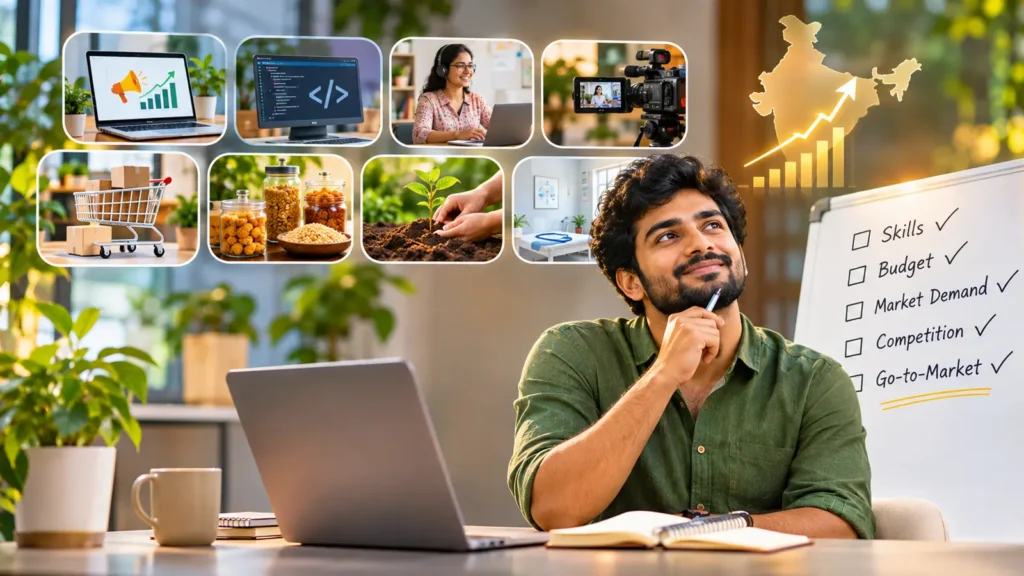
“Which business is best in India?” is one of the most searched questions by first-time founders, and for good reason. India has a huge consumer market, a fast-growing digital economy, government support for small businesses through schemes like Udyam (MSME) registration, and customers who are increasingly comfortable buying online and paying through UPI.
But here is the honest answer: there is no single “best” business in India. The best business is the one that matches your skills, your budget, and a real local demand, and that you can present clearly enough that customers choose you over the competition. This guide walks you through 12 business ideas that work well in India today, what to check before starting each one, and how branding and a good digital presence help a new business stand out.
A quick note: this is a starting point, not a guarantee. Investment, demand, profit and licensing vary by idea, city and execution, so validate locally before committing money.
Not sure which business fits you?
Get a free 20-minute brand consultation. Tell us your idea, and we will suggest the first steps for your name, identity and website.
Chat with us on WhatsApp →How to Decide Which Business Is Best for You
Before you look at any list of ideas, test each option against five simple questions:
- Do I understand the customer? Can you describe exactly who will buy, and why?
- Is there proven demand? Talk to 20 potential customers, not just friends and family.
- Can I stand out? What would make someone pick you over an established brand?
- Can I afford to survive the slow months? Plan for working capital, not just setup cost.
- Can I reach customers affordably? Know which channel (local, Instagram, Google, marketplaces, B2B referrals) will bring your first buyers.
Ideas that use something you already know, such as a trade, a skill, a local network or a regional product, usually have a much easier start than ideas you are picking only because they are “trending”.
Low-Investment Service Businesses
1. Digital marketing and social media services
Millions of small businesses in India now need a website, Google visibility, Instagram content and ads, but cannot afford a full in-house team. A focused agency serving one niche, such as clinics, restaurants, schools or manufacturers, is easier to sell than a general “we do everything” offer.
Consider: building a portfolio, choosing a niche, and setting clear scope and reporting. Brand angle: your own marketing is your proof. A sharp content strategy and a credible site help prospects trust you before the first call.
Want your agency to look like the expert?
Positioning and content strategy that help prospects find and trust you.
Define your positioning →2. Software, SaaS and automation for MSMEs
Many Indian traders, manufacturers and service providers still run on spreadsheets, WhatsApp and paper. Simple tools for billing, inventory, quotations, appointment booking or customer follow-up can be very valuable if they fit how these businesses actually work.
Consider: understand the workflow before you build, plan for support, and price in a way small businesses accept. Brand angle: non-technical owners buy what they understand. Clear demos and thoughtful UI/UX design make your product feel easy.
Make your product easy to trust
Product sites, demo pages and UI/UX that explain your tool simply.
See UI/UX design →3. Coaching, tutoring and online courses
Education is one of the largest spending categories for Indian families. Niche training, such as spoken English, coding, design software, competitive exams or workplace skills, can be run offline, online or hybrid, and scales well once your content and reputation are in place.
Consider: curriculum quality, measurable results and testimonials. Brand angle: clear positioning and a smooth enquiry or enrolment flow reduce drop-offs.
4. Video, photo and content production
Every brand now needs a steady flow of reels, product photos, explainer videos and ads. Specialising in one sector such as food, fashion, real estate or D2C helps you charge more. Formats like UGC-style creator videos are growing fast and can be offered as monthly packages.
Consider: equipment cost, turnaround time and recurring retainers instead of one-off shoots. If you are pricing your services, our guide on how much video production costs is a useful reference.
Product and D2C Businesses
5. Niche D2C brand (fashion, home, personal care or gifting)
Selling directly to consumers online lets a small Indian brand reach customers across the country. Brands with a clear point of view, for example sustainable cotton wear, handloom accessories, Ayurvedic personal care or personalised gifts, usually do better than generic stores.
Consider: sourcing and quality control, returns, inventory risk and customer acquisition cost. Brand angle: D2C lives or dies on brand. Start with brand strategy, then build the identity and e-commerce store. Paid ads come later through performance marketing, once your product pages convert. Our post on how to advertise a product on social media covers the launch side.
Positioning first, ads later
Brand strategy, identity, online store and launch campaigns in one plan.
Plan your D2C launch →6. Packaged traditional foods, millets and healthy snacks
Demand for millet products, traditional snacks, cold-pressed oils, pickles and clean-label foods keeps growing among health-conscious buyers in cities and abroad. Small-batch producers can start locally and scale through online stores and quick-commerce apps.
Consider: FSSAI licensing, labelling rules, shelf life and pricing against big brands. Brand angle: shoppers judge the pack first. A strong logo and packaging design separate your product from a generic one.
Shoppers judge the pack first
Logo, label and packaging identity for small-batch food brands.
See packaging design →7. Clothing, jewellery and accessories label
Fashion is one of the most popular first businesses in India, especially with strong textile hubs and skilled artisans across the country. Niches like kidswear, activewear, ethnic fusion, silver or temple jewellery, and sustainable fabrics are easier to own than “general fashion”.
Brand angle: a distinct label identity matters as much as the product. Read our guides on how to build a jewellery brand and fashion marketing tips, or see our fashion and lifestyle work.
Free download
Free Business Launch Kit for Indian Founders
An 8-page printable kit to take your idea from “maybe” to launch:
- Customer validation questions and tracker
- Registrations checklist (GST, Udyam, FSSAI and more)
- Working capital planner
- Naming worksheet and one-page brand brief
- First-90-days marketing plan
Food, Local and Retail Businesses
8. Cloud kitchen or meal subscription
Home-style meals, healthy lunch boxes, regional cuisines and diet meals delivered to offices, hostels and apartments can work without the rent of a dine-in restaurant.
Consider: food safety licensing, consistent taste, delivery logistics and aggregator commissions. Brand angle: a memorable name and steady social media marketing help you build direct customers instead of depending only on delivery apps.
Get direct orders, not just app orders
A memorable food brand plus a local social media plan.
See food & beverage work →9. Specialty café, bakery or local retail store
A café, bakery, organic store or specialty retail shop with a clear theme can become a neighbourhood favourite. In tier 2 and tier 3 cities, rising incomes mean customers are looking for better experiences closer to home.
Consider: location, footfall, rent and wastage. Brand angle: signage, interiors, menu and Instagram should all feel like one brand identity.
Manufacturing and B2B Businesses
10. Precision engineering, job-work and contract manufacturing
With manufacturing encouraged through initiatives like Make in India and PLI schemes, there is steady demand for machined parts, fabrication, tooling and job-work for larger manufacturers. It needs more capital, but it can build long, stable B2B relationships.
Brand angle: B2B buyers research suppliers online. A professional company website with capabilities, machines, certifications and sample work helps a small unit look as dependable as it is.
Win more B2B enquiries
Manufacturer websites that show your capabilities, machines and certifications clearly.
See web development →11. Sustainable and custom packaging
Every D2C brand, food business and gifting company needs packaging, and many want options that look premium and use less plastic. Custom boxes, mailers and paper-based alternatives are a growing B2B space.
Consider: minimum order quantities, material sourcing and design capability.
Health and Wellness Businesses
12. Fitness, yoga, physiotherapy or wellness studio
Indians are spending more on preventive health, fitness and mental wellbeing. Focused formats such as small-group training, women-only fitness, senior mobility, yoga or physiotherapy are easier to differentiate than a general gym, and many can also run online. See our guide on how to start an online fitness business.
Brand angle: trust is everything in health. Clear credentials, real client stories and a calm, consistent brand help new members feel comfortable. Our post on how healthcare brands can use social media has more ideas.
Help new clients trust you before they visit
Calm, credible branding and a website that turns visits into enquiries.
See fitness & wellness work →Quick Comparison: Which Business Suits Your Budget?
| Business type | Typical starting investment | Best for |
|---|---|---|
| Digital marketing, content, tutoring | Low | Skilled individuals, freelancers |
| Software / SaaS for MSMEs | Low to medium | Tech founders who understand a niche |
| D2C brand, packaged foods, fashion label | Medium | Product people who can build a brand |
| Cloud kitchen, café, retail store | Medium | Operators with local market knowledge |
| Manufacturing, job-work, packaging | High | Founders with industry experience and capital |
| Fitness and wellness studio | Low to high | Qualified practitioners and trainers |
Why Branding Decides Which Business Wins
In almost every category above, there are already established players. What separates a new business is rarely the idea itself. It is how clearly it is positioned and presented. If you are new to this, our guide to the types of branding is a good primer.
- Name and identity. Easy to say, spell and remember, with a logo that works on signage, packaging and phone screens.
- Positioning. Be specific about who you serve and what makes you different.
- Consistency. The same look and voice on your website, Instagram, packaging and print.
- Digital presence. Customers should be able to find you, understand you and contact you in seconds.
A Simple Launch Checklist
- Validate demand by speaking to real potential customers
- Define your niche and ideal customer
- Check registrations: GST, Udyam (MSME), FSSAI, trade licence or others for your business type
- Plan working capital for at least the first six months
- Set your positioning, name and brand identity
- Build a simple, fast website and Google Business Profile
- Start with one or two marketing channels you can sustain
- Track enquiries and sales so you know what is working
If you are based in Tamil Nadu, our list of business ideas in Coimbatore goes deeper into one city’s opportunities.
Final Thought
So, which business is best in India? The one you understand well, that solves a real need, and that you can present clearly and consistently. Start small, validate fast, and build a brand people recognise and remember.
If you are planning a new venture and want help with naming, identity, website or launch marketing, talk to Akkenna.
Ready to launch your business?
Book a free 20-minute brand consultation: naming, identity, website and launch marketing.
Book on WhatsApp →FAQ
Which business is best in India right now? There is no single best business. Ideas with strong demand include digital marketing services, software for small businesses, niche D2C brands, packaged healthy foods, cloud kitchens, coaching and wellness services. The best choice depends on your skills, budget and local demand.
Which business is most profitable in India? Profitability depends on investment, competition, pricing and execution rather than the category alone. Service businesses often have higher margins, while product and manufacturing businesses can scale bigger with more capital.
Which business can I start with low investment in India? Service-based ideas such as digital marketing, content creation, tutoring, freelancing and home-based food or craft products generally need the least upfront capital.
Which business is best for beginners in India? Beginners usually do best with a business linked to a skill they already have, a small first offer they can test quickly, and low fixed costs, such as a service business or a small online product brand.
Do I need to register my business in India? It depends on your structure and business type. Common registrations include GST, Udyam (MSME) and FSSAI for food. Check the current rules with a qualified professional before you start.
How important is branding for a new business in India? Very. Branding helps customers recognise, remember and trust you, especially in crowded categories. Clear positioning and consistent visuals often matter as much as the product.
