Why Graphic Design Matters for Business
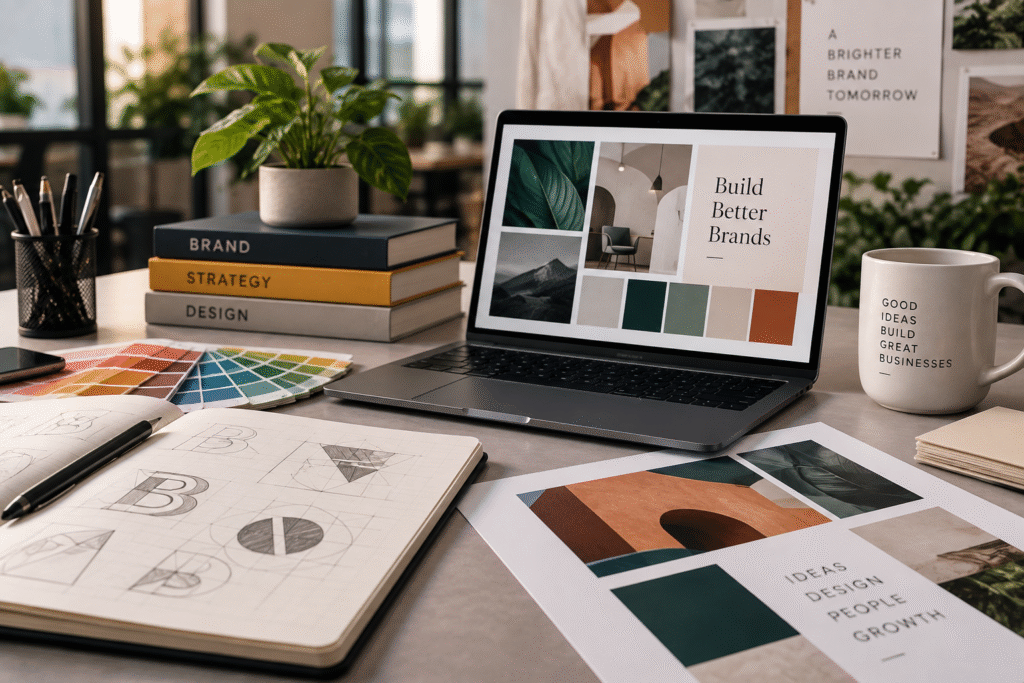
Graphic design matters for business because people judge credibility visually before they read a word. A consistent, well-executed design builds trust and recognition, while inconsistent or amateur visuals quietly cost sales, even when the product or service behind them is good.
Design is judged before the business is understood
Customers form an opinion about a business within seconds of seeing its website, packaging or social post, long before they’ve read anything or spoken to anyone. That first impression is entirely visual. If it feels unpolished or inconsistent, people carry that doubt into everything that follows, even if it’s not fair.
What good graphic design actually does for a business
1. Builds recognition. A consistent visual system, the same logo, colours and type, makes a business identifiable across every touchpoint, so customers recognise it faster each time.
2. Signals trust. In high-consideration categories like healthcare, finance or jewellery, visual polish is one of the few signals a new customer has to judge reliability before they commit.
3. Improves communication. Good layout and hierarchy make information easier to absorb, whether it’s a product page, a menu or a pitch deck. Poor design makes people work harder to understand something simple.
4. Supports every other marketing effort. Ads, social content and campaigns perform better when they build on a recognisable, well-designed brand, instead of competing with inconsistent visuals from the same business.
5. Differentiates from competitors. In categories where products or services look similar, design is often the deciding factor in who gets chosen.
What happens when graphic design is neglected
The cost is rarely obvious, because it shows up as small doubts rather than a single failure:
- A logo that looks amateur can make an established business seem newer or less credible than it is.
- Inconsistent visuals across the website, social media and packaging make a brand feel disorganised, even when the actual product is solid.
- Cluttered layouts and poor hierarchy on a website or menu increase the effort needed to find information, and some customers simply leave.
- A brand that looks different everywhere it appears has to rebuild trust every time, instead of carrying it forward.
None of this is usually a single bad decision. It builds up from treating design as an afterthought, handled piecemeal by whoever is available, rather than as one connected system.
Design quality and business size
| Business stage | Common design gap | Effect |
|---|---|---|
| New business | No consistent identity yet | Looks unfinished, harder to build trust |
| Growing business | Different vendors for logo, social, packaging | Brand starts to feel fragmented |
| Established business | Identity hasn’t evolved with the business | Feels dated next to newer competitors |
Design needs revisited at each stage, not fixed once and left alone.
Graphic design as an investment, not a cost
Framed as a line item, design can look optional. Framed as what shapes trust, recognition and conversion across every channel a business uses, it’s closer to infrastructure. The businesses that treat it that way tend to spend once on a proper system, rather than repeatedly on patchwork fixes.
If your visuals aren’t currently doing that work for you, it may be time to invest in graphic design that’s built as one connected system, not a collection of one-off pieces. Akkenna, a holistic branding agency in Coimbatore, designs across brand identity, packaging, social and digital, so every visual reinforces the same trust instead of working against it.
Frequently asked questions
Does graphic design really affect sales?
Indirectly but measurably. It shapes trust and clarity, both of which influence whether a customer stays, reads on or converts, especially in categories where customers compare several options before deciding.
Is graphic design more important for some industries than others?
It matters everywhere, but the stakes are higher in high-consideration or trust-driven categories like healthcare, finance and jewellery, where customers have fewer other signals to judge by early on.
Can a small business compete on design against bigger competitors?
Yes. Design quality depends on consistency and thought, not budget size. A small business with a clear, well-applied identity can look more credible than a larger one with a cluttered, inconsistent one.
How often should a business review its graphic design?
A light review yearly, and a fuller one every few years, or whenever the business changes significantly, such as a new market, product line or audience.
Not sure if your design is helping or hurting?
A short brand audit shows where your visuals build trust, and where they’re quietly costing you. Book a brand audit with the Akkenna team.
