What Is Graphic Design, and What Falls Under It?
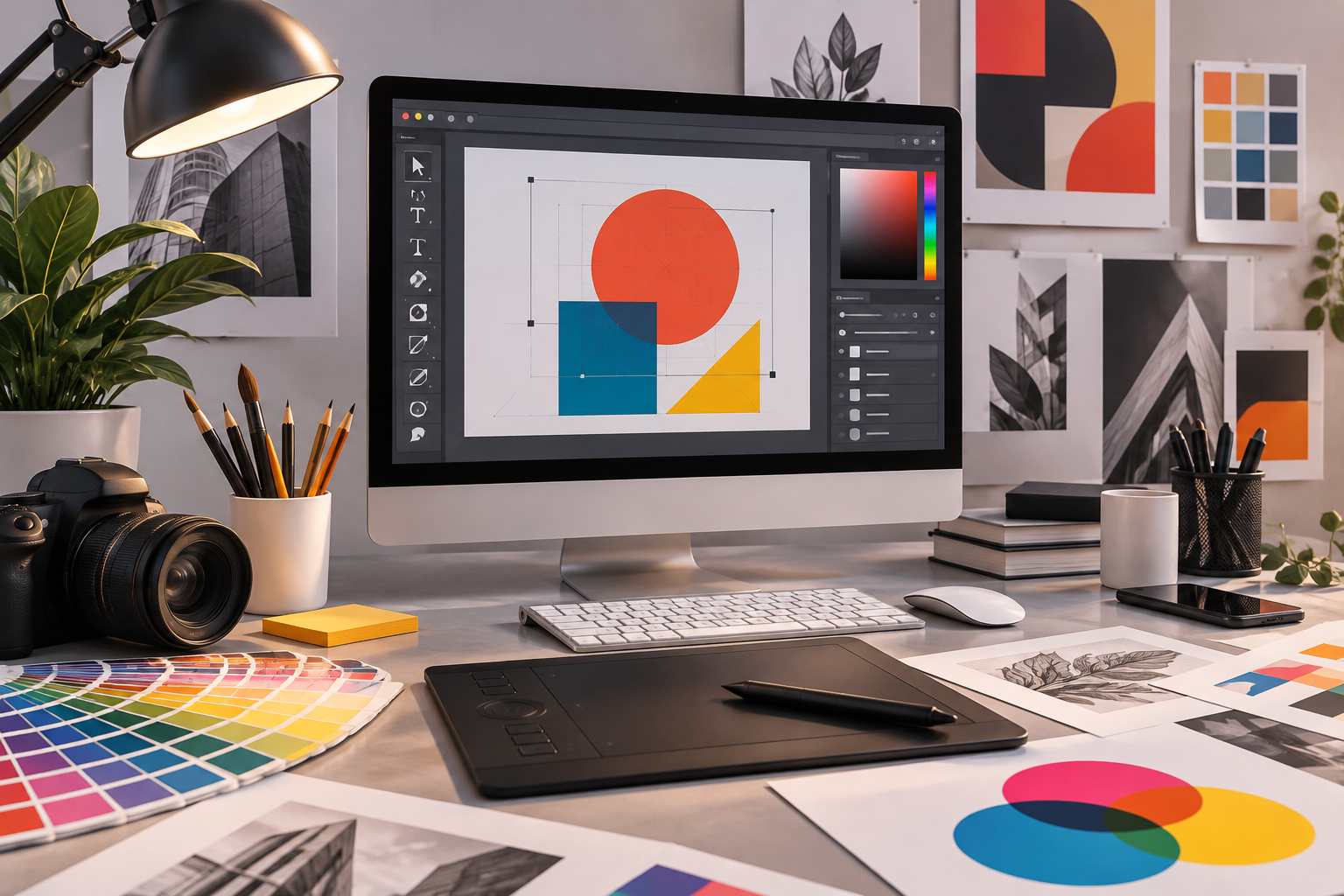
Graphic design is the practice of using visual elements, layout, typography, colour and imagery to communicate a message clearly. It covers everything from a logo and a brochure to a website layout and a social media post. The goal is always the same: make information or an idea easier to understand and remember.
What falls under graphic design
Graphic design isn’t one skill, it’s a set of related disciplines, each suited to a different output:
- Brand and identity design: logos, colour palettes, typography systems and brand guidelines.
- Print design: brochures, business cards, packaging, signage and stationery.
- Digital design: website layouts, app interfaces, banners and email templates.
- Marketing and advertising design: social media graphics, ad creatives and campaign visuals.
- Editorial design: magazines, reports, presentations and book layouts.
- Motion and multimedia design: animated graphics, video titles and interactive content.
- Packaging design: the visual system on a product’s box, label or container.
Some designers specialise in one of these, and larger studios or agencies usually have people who focus on different areas, since each has its own tools and conventions.
The building blocks every graphic designer works with
Whatever the output, graphic design draws on the same core elements:
| Element | What it controls |
|---|---|
| Typography | How text looks, and how readable and consistent it feels |
| Colour | Mood, contrast and brand recognition |
| Layout and composition | Where the eye goes first, and in what order |
| Imagery | Photography, illustration or icons that support the message |
| Hierarchy | Which information matters most, shown through size and placement |
| Whitespace | The empty space that keeps a design from feeling cluttered |
A designer’s job is choosing how these elements work together for a specific audience and purpose, not applying them by formula.
Graphic design vs. its closest neighbours
The terms below get used loosely, so it helps to separate them:
| Term | Focus | Typical output |
|---|---|---|
| Graphic design | Visual communication across print, digital and brand | Logos, layouts, print and digital assets |
| UI/UX design | How a digital product looks and functions for a user | App screens, website interfaces, user flows |
| Brand identity design | The full visual and verbal system of a brand | Logo, colours, typography, tone of voice |
| Illustration | Original drawn or digital artwork | Custom images, icons, character art |
| Motion graphics | Animated visual storytelling | Explainer videos, animated logos, title sequences |
Graphic design sits underneath most of these, since UI/UX, brand identity and motion graphics all depend on the same core visual principles, applied to a specific medium.
Where graphic design is used in a business
Graphic design shows up almost everywhere a business communicates:
- A logo and brand identity that make the business recognisable
- Packaging that has seconds to catch attention on a shelf
- A website and app that need to be both clear and pleasant to use
- Social media posts and ad creative that stop the scroll
- Presentations, proposals and reports that need to look credible
- Signage and print material for physical locations
Because it touches so many touchpoints, inconsistent graphic design is one of the fastest ways a brand starts to feel fragmented, one look on the website, another on Instagram, a third in printed material.
Why it’s worth treating as one connected discipline
Graphic design is easiest to manage well when one team or one clear system governs all these outputs, rather than a different freelancer handling each piece. A logo, a social template and a brochure that were each designed in isolation rarely feel like the same brand, even if each one looks fine on its own.
If you want your visual communication to stay consistent across every graphic design output, from logo to packaging to social content, it helps to have one team apply the same brand system everywhere. Akkenna, a holistic branding agency in Coimbatore, handles graphic design as part of a connected brand identity, so nothing drifts as it moves from channel to channel.
Frequently asked questions
Is graphic design the same as digital marketing?
No. Graphic design creates the visuals. Digital marketing decides where and how those visuals are used to reach and convert an audience. The two work closely together but are different disciplines.
Do I need a graphic designer if I already use templates?
Templates work for quick, low-stakes content. For anything tied to your brand identity, like a logo, packaging or a website, a designer avoids the generic, inconsistent look templates tend to produce.
What software do graphic designers use?
Common tools include Adobe Illustrator, Photoshop and InDesign, along with Figma for digital and UI work. The tool matters less than the thinking behind the design.
Can graphic design help a small business compete with bigger brands?
Yes. Consistent, well-executed design often does more to build trust than budget size, especially in categories where customers judge credibility visually before they engage further.
Want your visuals to feel like one brand?
A short brand audit shows where your graphic design is inconsistent across channels, and what to fix first. Book a brand audit with the Akkenna team.
