
UGC Brief Template: How to Plan Creator Videos for Your Business
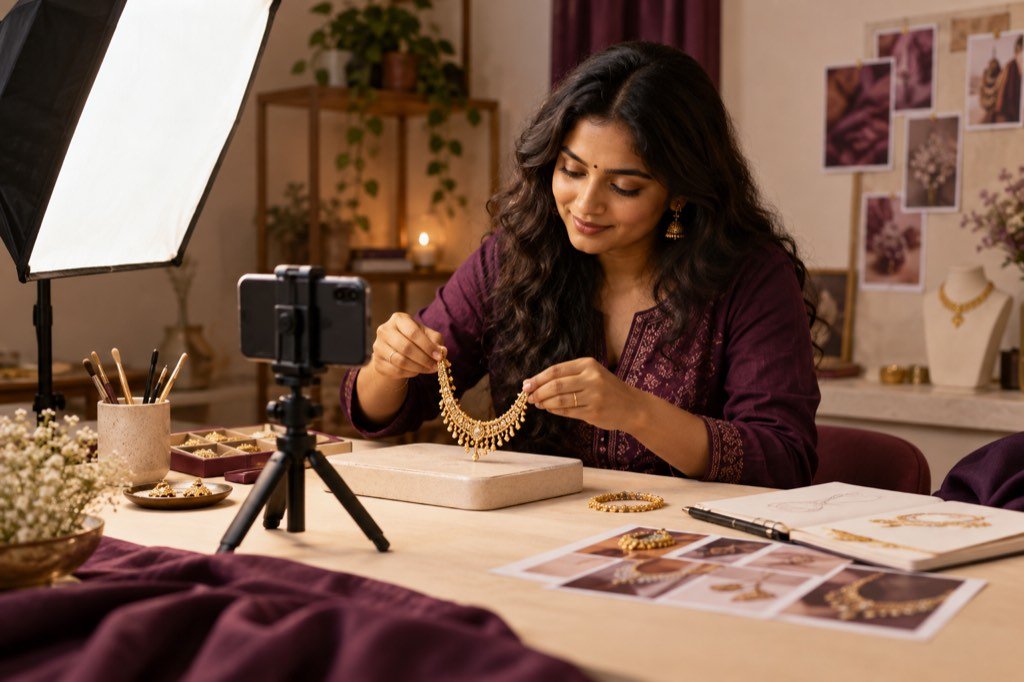
Akkenna journal / Creator content
By Aravind · Co-founder & Head of Design
Better videos start before the camera.
A practical UGC brief template for clearer ideas, smoother approvals and content your business can actually use.
The short answer: define one goal, a real audience, verified facts, specific deliverables and agreed permissions—then give the creator room to sound human.
A creator can film a beautiful video and still miss what your business needs. Perhaps the product looks good, but viewers never see how it works. The presenter sounds natural, but the message speaks to the wrong customer. Or the edit arrives without the versions your marketing team expected.
A clear UGC brief template helps prevent these gaps before filming. It gives the creator enough direction to understand the assignment while leaving space for their personality.
For a Coimbatore business, that might mean conversational Tamil, English captions, a recognisable shop setting or a demonstration answering a common customer question. This guide explains what to include and gives you a reusable template and an illustrative jewellery brief.
What is a UGC video brief?
A UGC video brief is a working document explaining what a creator should produce, who it is for and how the business intends to use it. It brings the objective, product information, creative direction, deliverables and approval process into one place.
Organic user-generated content comes from users sharing their experiences. Paid UGC-style content is commissioned creator work; it should not be presented as an independent customer endorsement when it is not one. Shopify explains this distinction in its UGC guide.
If you need help choosing between reusable content and access to a creator’s audience, read our guide to UGC vs influencer marketing.
1. Start with one business objective
“Create an engaging video” is too broad to guide production. Decide whether this asset should explain a product, answer a question, introduce a collection or encourage a relevant enquiry. One clear job makes both filming and approval easier.
Too vague
“Make a video about our jewellery.”
The creator still has to guess the customer, message and useful shots.
More useful
Show the fastening and fit.
Demonstrate how the earring fastens, show its appearance when worn and invite viewers to explore the collection.
Do not ask one short video to explain your whole business, launch a collection and answer every objection. Give separate ideas their own briefs or versions.
2. Describe a person, not just an age range
Explain what the viewer already knows, what they are considering and what information would help them decide. For example: “Shoppers comparing everyday earrings online who want to see the size and fastening before asking about availability.”
Add geography only when it affects the assignment. A store-visit campaign may need directions and opening hours. A product sold across India may need a broader explanation, without repeated city references.
For Tamil UGC content, specify conversational Tamil, English or a natural mix. Include pronunciation notes for the brand and clarify whether captions require translation or a separate spoken version.
3. Supply facts the creator can trust
Prepare the exact product name, variant, approved specifications, care instructions and any current offer details. Mark the information that must appear and the claims that must not be made.
Separate filming directions from product claims. “Show the fastening in close-up” is a direction. “Suitable for everyone” is a claim that needs appropriate support. If a creator has not used the product over time, do not ask them to invent a long-term personal experience. Choose a demonstration or factual walkthrough instead.
4. Make deliverables easy to count
“Three videos” can mean three original concepts or one edit with three openings. These involve different amounts of work. List the outputs before comparing quotations.
| Deliverable | Illustrative requirement |
|---|---|
| Main video | One edited vertical product demonstration |
| Length | Approximately 25–35 seconds |
| Alternate opening | One additional opening using the same main edit |
| Text versions | One captioned version and one clean version |
| Cover | One selected frame |
| Additional footage | Only the agreed clips, if included |
This is an example scope, not an Akkenna package or a universal platform specification. Confirm the current requirements of the intended placement before filming. Discuss raw footage, extra languages and reshoots explicitly.
5. Give every shot a purpose
A shot list should answer customer questions. Attractive close-ups alone may not explain the product. Use this four-part storyboard as a starting point, then adapt it to the actual brief.
The question
Open with the uncertainty: “Wondering how this fastening works?” Show the relevant product immediately.
The demonstration
Film the fastening in use. Keep the action clear and close enough to follow.
The context
Show the earrings being worn so viewers can judge their appearance and scale.
The next step
Invite viewers to explore designs or ask about availability. Choose one relevant action.
This storyboard is an illustrative planning example, not a customer testimonial. Adapt the shots to verified product information and the creator’s practical filming setup.
6. Guide the message without scripting every word
Divide direction into three parts: must include, creative freedom and must avoid. Required elements might be the accurate product name, a demonstration and the next step. The creator can still choose natural transitions and delivery.
Highlight any sentence that genuinely needs exact wording. Do not bury it inside a long script. This helps your reviewer distinguish a factual correction from a stylistic preference and keeps the final content from sounding like a memorised brochure.
7. Clarify intended usage before filming
Explain whether the content is intended for brand social accounts, a product page, paid advertising or a creator’s own account. Discuss the duration, territories, editing, repurposing and any additional language versions.
Do not assume a production fee includes every intended use. Music, third-party material, people and locations may also require appropriate permissions. Shopify notes the importance of usage rights when creator content is used in advertising. Read its UGC overview. The brief records requirements; it does not replace an appropriate agreement.
8. Make approval straightforward
Name one person to consolidate feedback. Agree the concept, first-edit and final-delivery milestones, alongside the included feedback rounds. Confirm which changes require a new quotation.
A simple approval route
Brief → concept → first edit → consolidated feedback → final files
Use timestamps: “At 00:12, correct the product name” is more actionable than “The middle needs work.”
A factual correction is different from changing the location, presenter or entire concept after filming. Discuss these distinctions before production so everyone knows what the original scope covers.
Copy-and-use UGC creator brief template
Copy these fields into your working document. Complete the details that affect the assignment and remove irrelevant fields. Attach a small number of references and explain the specific feature you like in each.
| Field | Your instructions |
|---|---|
| Project | Business, product and campaign name |
| Objective | The single outcome this asset should support |
| Audience | Who is watching and what they need to understand |
| Location and language | Relevant geography, spoken language and captions |
| Product facts | Approved specifications and reference materials |
| Main message | The one idea viewers should remember |
| Opening and shots | The starting question and required demonstrations |
| Deliverables | Count, concepts, versions, length and formats |
| Creative freedom | What the creator can interpret |
| Restrictions | Claims, visuals or wording to avoid |
| Usage requirements | Channels, advertising, duration and territories |
| Approvals | Reviewer, stages and included feedback rounds |
| Schedule | Product arrival, draft and final deadlines |
| Commercial scope | Agreed fee, extras and payment milestones |
| Measurement | Business action and supporting metrics |
Example: a jewellery business in Coimbatore
Illustrative brief—not a client case study or a promised result.
Objective: help prospective customers understand an earring’s appearance and fastening before enquiring. The audience is shoppers who need a clearer view than a product photograph provides.
Language: conversational Tamil with an agreed English-captioned version. Begin with an online-shopping question, demonstrate the fastening and finish with a worn view.
Required information: the business supplies verified dimensions, materials and availability. The next step is to contact the shop for current availability—not an invented discount or urgency claim.
What to avoid: unsupported material claims, invented customer stories and unapproved offers. Review relevant enquiries alongside the video’s distribution and engagement data.
The creator now knows what to film, and the business knows what a complete delivery should contain. That clarity is the practical value of the brief.
Measure the job you commissioned
Do not judge every video by views alone. For an explanatory asset, examine useful product-page visits and recurring customer questions. For an enquiry-focused campaign, review the enquiries that can reasonably be attributed to it.
Use clearly labelled campaign links where practical, and test the destination page and enquiry tracking before launch. If comparing two openings, keep the audience, offer and distribution conditions as similar as possible. Different budgets or audiences make simple comparisons unreliable.
Record what worked and update the next brief. One video is evidence to learn from, not proof that a format will always succeed.
Questions before you book a creator
How long should a UGC brief be?
One or two focused pages can be a practical starting point, with product facts and references attached separately. Complex projects may need more detail. Keep the main instructions easy to use while filming.
Does every video need a full script?
No. An outline, verified facts and a shot list may be enough. Use exact wording where accuracy requires it, while allowing natural delivery elsewhere.
Can one creator make Tamil and English versions?
Possibly. Review relevant examples and agree whether you need separately filmed versions, translated captions or both. These are different deliverables.
Will the creator post the video too?
Only if posting is included. Content production and distribution to the creator’s audience are separate requirements.
Should the script repeat local keywords?
No. Mention Coimbatore when the location helps the viewer, such as a store-visit video. A product demonstration should not repeat city names just for SEO.
Does a clearer brief guarantee sales?
No. It can reduce ambiguity, but results also depend on the product, offer, audience, distribution and customer experience.
Start with a clearer brief.
Decide what your customer needs to see, what you can truthfully say and where the content will run. Akkenna can help connect the brief to your brand and campaign.
Discuss your content brief →