How to Start an Online Fitness Business: A Step-by-Step Guide
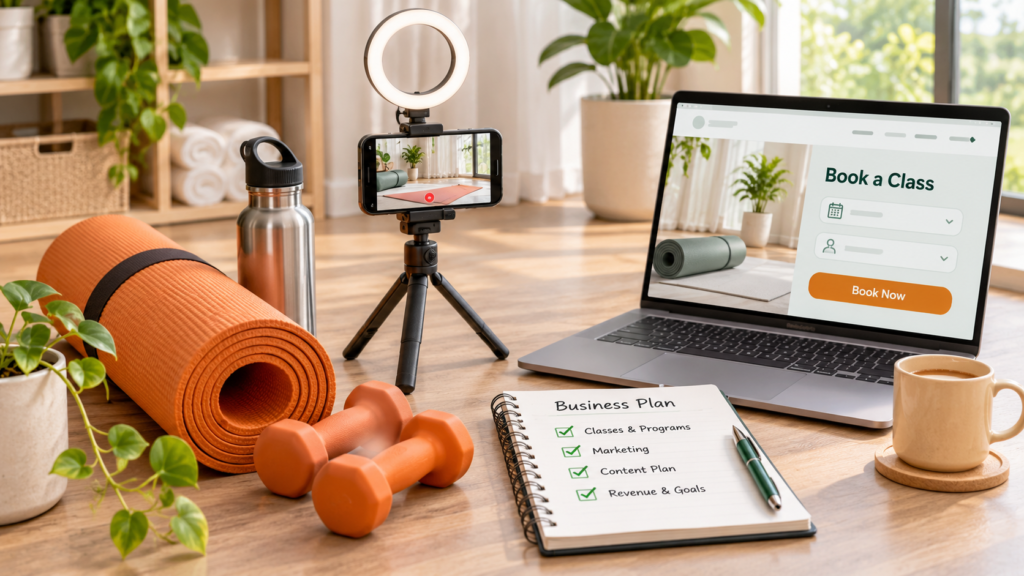
Online fitness has made it possible to coach clients in another city from your living room, sell a training programme to people you’ll never meet, or build a community around a particular way of moving. You don’t need a gym lease or a large team to begin. You do need a clear offer, a trustworthy brand, the right technology, and a way to keep clients coming back.
This guide explains how to start an online fitness business, from choosing a niche and business model to legal basics, branding, your website and tools, content, marketing, pricing, and retention. It’s written for trainers, coaches, yoga and wellness instructors, gym owners moving online, and founders building fitness brands.
A note first: this article is general business guidance, not legal, medical, or financial advice. Requirements for qualifications, registration, taxes, and health-related claims vary by country and change over time, so check current rules with the relevant authorities and professional advisers.
What Is an Online Fitness Business?
An online fitness business delivers training, coaching, classes, or wellness programmes through digital channels rather than, or in addition to, in-person sessions. Common models include:
- One-to-one online coaching: personalised programmes, check-ins, and feedback
- Live group classes: scheduled sessions over video, such as strength, yoga, dance, or mobility
- On-demand video library: a catalogue of recorded workouts that members can access anytime
- Membership or subscription: ongoing access to classes, programmes, and community
- Fixed-length programmes or challenges: for example, a six-week strength programme or a beginner running plan
- Fitness app: a branded app with workouts, tracking, and community features
- Hybrid: online offerings combined with in-person sessions or events
- Corporate wellness: programmes for companies and teams
- Digital products: guides, meal plans, workout plans, and templates
Many businesses start with one model, such as one-to-one coaching or a small paid group, and add others as they grow.
Step 1: Choose Your Niche and Audience
“Fitness for everyone” is hard to market. A narrow focus makes you easier to find, easier to trust, and easier to recommend. Consider:
- Who you help: beginners, busy professionals, new mothers, older adults, athletes, office workers, people returning from a break, or students
- What they want: strength, flexibility, weight management, sport-specific skills, mobility, stress relief, or general fitness
- Your style: strength training, yoga, Pilates, HIIT, dance, martial arts, running, or functional movement
- Your edge: your own story, expertise, approach, or community
Questions to test a niche:
- Do I understand these people’s problems and daily lives?
- Is there enough demand, and are people willing to pay?
- Who else serves them, and how can I differ?
- Can I deliver results or value consistently?
Specific beats broad. “Strength training for busy working women over 30” tells people who it’s for. “Fitness coaching” doesn’t.
Step 2: Research the Market and Competitors
Study other online fitness businesses serving your audience. Look at:
- Their offers, formats, and prices
- How they position themselves and speak to customers
- Their content, community, and reviews
- What clients praise and complain about
- Gaps you could fill, such as better support, clearer progress tracking, simpler programmes, or more affordable access
Talk to potential clients directly. Short conversations or surveys often reveal what people struggle with and what they’d pay for.
Step 3: Define Your Offer, Format, and Pricing Approach
Turn your niche into a clear offer:
- What do clients get? Programmes, classes, check-ins, feedback, community, nutrition guidance (where you’re qualified), and resources
- How is it delivered? Live video, recorded content, messaging, an app, or a mix
- How long does it last? One-off, fixed-term, or ongoing
- What outcomes can you honestly support? Focus on process and support rather than guarantees
Pricing
Pricing depends on your model, expertise, market, and the value you provide. Consider:
- Your costs and time, including preparation, delivery, and admin
- What similar offers charge, and how yours differs
- Your clients’ ability to pay
- Different tiers, such as a lower-priced group option and a premium one-to-one option
- Payment structures, such as monthly subscriptions, packages, or one-time fees
- Introductory offers or trial periods, used thoughtfully
Avoid underpricing to compete. Low prices can signal low value, and they make it hard to sustain the business. Test your pricing, listen to feedback, and adjust.
Step 4: Check Qualifications, Legal Basics, and Safety
Fitness involves people’s health and safety, so take this step seriously.
Qualifications and scope
- Hold appropriate, recognised qualifications for the services you offer, such as personal training, yoga teaching, or sports coaching certifications
- Stay within your scope. Fitness professionals generally shouldn’t diagnose conditions, treat injuries, or give medical advice
- Be careful with nutrition and supplements. Specific dietary advice may require specific qualifications or registration in some places
- Refer clients to doctors or physiotherapists when needed
Client safety
- Use a health and readiness screening form before starting clients, and encourage those with health concerns to consult a doctor first
- Provide clear safety guidance, modifications, and progressions in your sessions
- Keep records of client information, consent, and agreements
- Have a plan for emergencies during live sessions, such as knowing the client’s location and emergency contact
Business and legal
- Business structure and registration: Choose a structure (sole proprietor, partnership, company, or other) and complete registrations required in your location
- Taxes: Understand your tax obligations, including indirect taxes where applicable. In India, for example, this may involve GST and other registrations depending on turnover and structure, so consult a qualified adviser
- Contracts and terms: Write clear terms of service, cancellation and refund policies, and client agreements
- Disclaimers and waivers: Use clear disclaimers about health risks and personal responsibility, drafted or reviewed by a legal professional
- Insurance: Consider professional indemnity and liability insurance suitable for your activities
- Data protection: If you collect personal and health-related information, follow applicable privacy laws and keep data secure
- Advertising rules: Avoid exaggerated or misleading claims, especially around weight loss, health outcomes, and “before and after” results. Advertising standards bodies and platforms restrict such claims in many places. Check current guidance, such as ASCI standards in India
- Music and content licensing: Make sure you have rights to any music or media used in classes and videos
When unsure, get professional advice before you launch.
Step 5: Build Your Brand
In online fitness, your brand carries a lot of weight. Clients can’t see your studio, so they judge you by your name, look, voice, content, and reviews.
Brand strategy and positioning
Define who you serve, what you stand for, and why you’re different. A clear brand strategy gives your offer a consistent identity and message, so potential clients quickly understand what you’re about and whether it’s for them. Decide your personality, such as encouraging, no-nonsense, scientific, playful, or calm.
Name
Choose a name that’s easy to say, spell, and remember, fits your positioning, and is available as a domain and social handle. Check that it isn’t too close to existing brands.
Logo and visual identity
A professional logo design and a coherent brand identity, including colours, typography, imagery style, and templates, make your business look credible and recognisable across your website, social media, videos, and documents. Our guide [Fitness Logo Design: How to Create a Logo That Builds Trust and Motivation] covers what makes a fitness logo effective, and consistent graphic design assets keep posters, social posts, and programme materials looking cohesive.
Step 6: Set Up Your Website, Tools, and Payments
Your website is your online headquarters. It should explain who you help, what you offer, how it works, and how to join.
What your website needs
- Clear homepage: who it’s for, the main benefit, and a clear call to action
- Programme or service pages: what’s included, who it suits, how it works, and pricing or enquiry options
- About page: your story, qualifications, and approach
- Proof: testimonials, reviews, and results shared with permission and presented responsibly
- Booking or enrolment: a simple way to sign up, book a call, or join a class
- FAQs and policies: answers to common questions, cancellation terms, and safety information
- Blog or resources: helpful content that builds trust and supports search visibility
- Mobile-friendly design: most visitors will arrive from their phones
Thoughtful UI/UX design makes sign-up and booking simple, and a reliable site built through web design and development gives you a fast, secure foundation you control. If you plan to sell programmes, plans, or merchandise, e-commerce development provides the structure for products, payments, and orders.
Tools you’ll likely need
- Video delivery: a platform for live classes and, if relevant, hosting for on-demand content
- Scheduling and booking: to manage classes and one-to-one sessions
- Payments: a secure way to take one-time and recurring payments
- Client management: a system to track clients, programmes, progress, and communication
- Messaging: a channel for check-ins and support, handled with privacy in mind
- Email or newsletter tool: to stay in touch with leads and clients
- Analytics: to understand where visitors and clients come from
You can start with simple tools and upgrade as you grow. If you eventually want your own branded app, plan it carefully, since apps need design, development, and ongoing maintenance.
Your equipment
For filming and live sessions:
- A decent camera or smartphone on a stable stand
- Good lighting, ideally soft and even
- A clear microphone, since audio matters a lot in coaching
- A tidy, safe training space with enough room
- Basic equipment suited to your style, such as mats, bands, or weights
Step 7: Create Your Content and Programmes
Programme design
Build programmes around your clients’ goals and abilities. Include clear structure, progressions, safety guidance, and ways to track progress. Pilot your programme with a small group first and use their feedback to refine it.
Marketing content
Content helps people find you and decide whether to trust you. Mix:
- Educational: tips, technique guides, and myth-busting within your scope of expertise
- Demonstration: short exercise clips, class previews, and form checks
- Motivational: stories, behind-the-scenes, and community moments
- Proof: client experiences, shared with permission, and presented honestly
- Promotional: programme launches, offers, and enrolment dates
A content strategy links topics to your goals so you’re not just posting randomly. Video is central in fitness. Short clips, trailers for classes, and simple explainers can all work. Animated formats such as motion graphics can add polish to intros, exercise breakdowns, and programme overviews, and creator-style UGC videos can show real clients’ experiences with their permission. For help producing good video, see [How to Make Professional Videos for Business].
Step 8: Market Your Online Fitness Business
Start with a simple marketing foundation
- A clear niche and offer
- A professional website
- Complete, consistent social profiles
- A way to capture leads, such as a free guide, sample class, or newsletter
Channels that often work for fitness
- Social media: Instagram, YouTube, Facebook, and short-form video are strong for fitness. Regular social media marketing keeps you visible, and our guide [How to Promote Your Instagram Profile: 15 Practical Ways to Grow] covers practical ways to build your audience on one major platform. For a full plan, see [How to Create an Effective Social Media Strategy].
- Search and content: Blog posts and videos that answer questions people search for, such as beginner workouts, mobility routines, or how to start training at home.
- Email and messaging: Nurture leads with helpful content, class reminders, and updates.
- Free trials, challenges, and webinars: Let people experience your coaching style before they commit.
- Partnerships: Collaborate with complementary businesses, such as nutrition coaches, physiotherapists, wellness brands, or local communities.
- Referrals and word of mouth: Happy clients are your best marketing, so make it easy for them to share.
- Paid advertising: Once your offer and website convert, targeted ads can extend your reach. Structured performance marketing helps connect spend to results such as enquiries and sign-ups.
Marketing responsibly
Be careful with claims. Avoid promising specific weight-loss or health outcomes, using misleading before-and-after content, or targeting insecurities. Honest, supportive messaging builds longer-lasting trust.
Step 9: Launch Smart
Rather than waiting until everything is perfect, plan a focused launch:
- Pre-launch: Build interest with a waitlist, free content, and early conversations.
- Pilot or founding members: Offer a limited first group at an introductory rate, in exchange for feedback and, with permission, testimonials.
- Launch: Open enrolment with a clear date, offer, and call to action.
- Review: Collect feedback, measure results, and improve the programme before scaling.
Step 10: Deliver a Great Client Experience and Retain Clients
Retention is where an online fitness business becomes sustainable. Clients stay when they feel supported, see progress, and enjoy being part of something.
- Onboarding: Welcome clients clearly, set expectations, and make the first week easy
- Personalisation: Where possible, adapt to individual needs, abilities, and goals
- Check-ins and feedback: Regular communication keeps clients accountable
- Progress tracking: Help clients see improvement, using measures they care about
- Community: Create ways for members to connect and encourage each other, with clear community guidelines
- Variety and structure: Keep sessions fresh while maintaining a clear plan
- Responsiveness: Answer questions promptly and kindly
- Reviews and referrals: Ask satisfied clients to share their experience
- Handle problems well: Address complaints or concerns professionally and fairly
Step 11: Track Your Numbers and Grow
Measure what matters so you can make informed decisions.
| Area | Useful measures |
|---|---|
| Marketing | Website visitors, enquiries, sign-ups, cost per lead |
| Sales | Conversion rate, average revenue per client, revenue |
| Retention | Client retention, churn, attendance, completion rates |
| Satisfaction | Reviews, feedback, referrals |
| Operations | Capacity, hours spent, margins |
Use your results to decide when to raise prices, add programmes, hire help, build an app, or expand into new audiences. Grow at a pace you can sustain without compromising quality.
Common Mistakes When Starting an Online Fitness Business
- Targeting everyone. A clear niche is easier to market and deliver.
- Skipping legal and safety basics. Qualifications, waivers, insurance, and screening matter.
- Making unrealistic promises. Honest, process-focused messaging builds trust.
- Underpricing. It can undermine value and sustainability.
- Weak branding. A generic look makes it hard to stand out.
- A confusing website. If people can’t see what you offer or how to join, they leave.
- Poor audio and video quality. Clients need to see and hear you clearly.
- Over-investing in tools before validating the offer. Start simple.
- No retention plan. Acquiring clients without keeping them is expensive.
- Inconsistent marketing. Visibility needs regular effort.
- Ignoring data. Without tracking, it’s hard to improve.
- Doing everything alone for too long. Outsource tasks like design, editing, or admin once you can.
A Quick Online Fitness Business Launch Checklist
- Niche, audience, and offer defined
- Market and competitors researched
- Pricing approach and packages set
- Qualifications, screening, waivers, and insurance in place
- Business registration, tax, and contracts handled
- Brand name, logo, and visual identity created
- Website with clear offer, booking, and policies
- Payments, scheduling, and video tools set up
- Filming equipment and training space ready
- Programme or class content prepared and piloted
- Content plan and social profiles set up
- Lead capture and email list started
- Launch plan with founding members or pilot group
- Onboarding and retention process designed
- Tracking and review schedule in place
Final Thought
Starting an online fitness business is easier than it’s ever been, but standing out and staying in business takes clarity and care. Choose a focused niche, build a trustworthy brand, put safety and honesty first, make joining effortless, and give clients a reason to stay. Start small, learn quickly, and build from there.
If you’re launching an online fitness brand and want help with positioning, logo and identity, your website, or video and social content, talk to Akkenna.
FAQ
How do I start an online fitness business? Choose a niche and audience, research the market, define your offer and pricing, handle qualifications and legal basics, build your brand, set up a website and tools, create programmes and content, market your business, launch with a pilot group, and focus on client experience and retention.
What qualifications do I need to start an online fitness business? Requirements vary by country and by service. Many online fitness professionals hold recognised certifications in personal training, yoga, or related areas. Check the expectations in your location and stay within your scope of practice.
How much does it cost to start an online fitness business? Costs depend on your model and setup, and may include certifications, equipment, website and tools, branding, insurance, and marketing. Many people start lean and add investment as they grow.
What equipment do I need for online fitness coaching? At minimum, a smartphone or camera, a stable stand, good lighting, a clear microphone, a stable internet connection, and basic training equipment for your style.
Do I need a website for an online fitness business? It’s strongly recommended. A website gives you a place to explain your offer, show credibility, take bookings or payments, and build an audience you control beyond social platforms.
How do I get my first online fitness clients? Start with people you already know, offer a pilot or founding-member group, share helpful content, run a free class or challenge, ask for referrals, and make it easy to enquire or sign up.
What is the best business model for online fitness? It depends on your skills and audience. One-to-one coaching can offer high-touch results, group programmes and memberships can scale, and on-demand libraries offer flexibility. Many businesses combine models over time.
Do I need insurance and legal documents for online fitness? It’s advisable. Professional indemnity or liability insurance, clear terms, waivers, and privacy policies help protect you and your clients. Get advice from a qualified professional for your situation.
