How to Start an Artificial Jewellery Business at Home: A Step-by-Step Guide
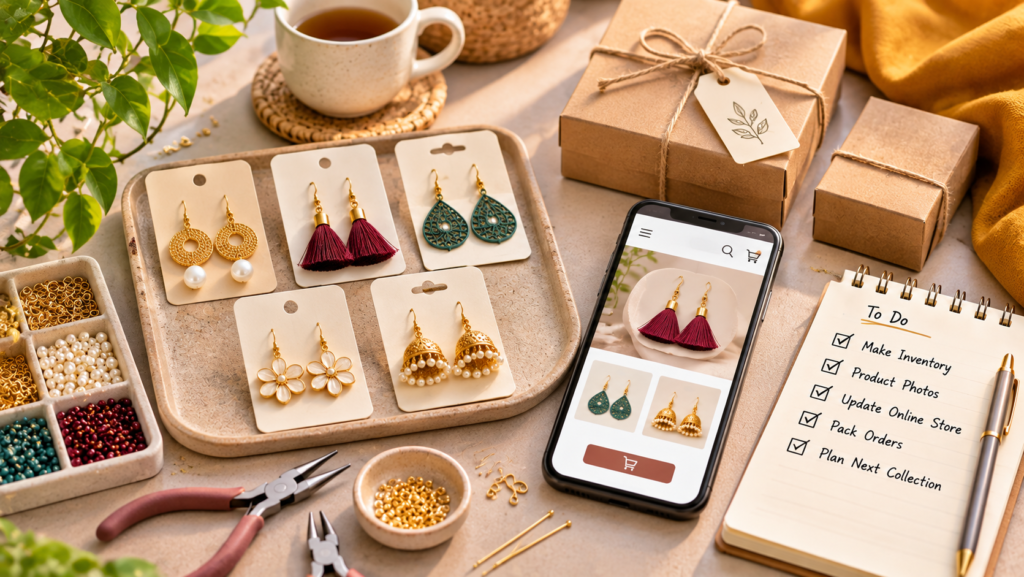
Artificial jewellery is one of the most accessible ways to start a business from home. You don’t need a showroom, large stock of precious metal, or a big team. You can begin with a small collection, sell through WhatsApp and Instagram, and grow into an online store, exhibitions, or a recognisable label.
But “easy to start” doesn’t mean “easy to stand out.” Thousands of home-based sellers offer similar earrings, necklaces, and bangles. The ones who build lasting businesses choose a clear niche, keep quality consistent, present their work well, and build a brand customers remember.
This guide explains how to start an artificial jewellery business at home, from choosing a niche and sourcing materials to pricing, legal basics, branding, photography, selling, and growth. It’s written for beginners, homemakers, students, designers, and anyone looking to turn a creative skill into a business, with a focus on India.
A note first: this is general business guidance, not legal, tax, or financial advice. Registration, tax, and local permission requirements vary by location and change over time, so check current rules with the relevant authorities and a qualified adviser.
What Is Artificial Jewellery?
Artificial jewellery, also called imitation or fashion jewellery, is made from materials other than precious metals and natural gemstones. Common materials include brass, copper, alloys, German silver, plated metals, beads, glass, acrylic, resin, thread, fabric, terracotta, polymer clay, and artificial stones.
It’s popular because it’s affordable, fashionable, and available in endless styles. Customers buy it for outfits, festivals, weddings, gifting, office wear, and everyday use.
Popular categories include:
- Traditional and ethnic: kundan, oxidised, antique, temple-style, jhumkas, and bridal sets
- Handmade: beaded, thread, terracotta, clay, resin, crochet, and macramé pieces
- Contemporary and minimalist: lightweight daily-wear earrings, chains, and rings
- Statement and party wear: bold necklaces, layered pieces, and cocktail rings
- Kids’ jewellery: gentle, colourful, and playful designs
- Gifting and occasion pieces: personalised, festive, and bridesmaid sets
- Hair and fashion accessories: clips, bands, anklets, and waist chains
Why Start Artificial Jewellery at Home?
- Low barrier to entry. You can begin small, without a shop or large stock.
- Flexible. Work around your schedule and responsibilities.
- Creative. You can design, source, or assemble pieces to your own taste.
- Scalable. Start with a few designs and add more as demand grows.
- Online-friendly. Visual products sell well on social media and online stores.
- Repeat demand. Customers often buy multiple pieces for different outfits and occasions.
Still, it takes planning, consistency, and customer focus to turn a hobby into a business. For a look at the economics of the wider category, see [How Profitable Is the Jewellery Business? Margins, Costs, and What Drives Profit].
Step 1: Choose Your Niche and Customer
“All types of jewellery for everyone” is hard to market. A clear niche helps people understand what you stand for, makes sourcing and production easier, and helps your business stand out. Consider:
- Who is your customer? College students, working women, brides, mothers, teens, or festive shoppers?
- What style? Traditional, trendy, minimalist, bohemian, or handcrafted?
- What price range? Budget, mid-range, or premium artificial jewellery?
- What occasions? Daily wear, office, festive, wedding, or gifting?
- What makes you different? Original designs, handmade technique, quality finish, personalisation, or a particular aesthetic?
Examples of niches include lightweight office-wear earrings, handmade terracotta jewellery, bridal kundan rentals, oxidised festive sets, or personalised name jewellery for gifts.
Test your niche by talking to potential customers, looking at what sells locally and online, and starting with a small trial batch.
Step 2: Research the Market and Competitors
Before investing, study what’s already out there:
- What are other home-based and online sellers offering?
- What price ranges do similar items sell for?
- Which designs and categories seem popular, and which are oversaturated?
- What do customers praise or complain about in reviews?
- Where are the gaps? Better finish, more unique designs, faster delivery, easier returns, or better presentation?
Look at local shops, wholesale markets, Instagram sellers, marketplaces, and fashion trends. Aim to find a position you can hold, not just a product list.
Step 3: Decide Your Business Model
You can make, assemble, or source, and many sellers do a mix.
- Handmade or designed by you: You create or assemble pieces from raw materials. This gives you the most originality and control, but it takes time and skill.
- Assembly and customisation: You buy components such as beads, hooks, and stones, and assemble unique designs.
- Reselling: You buy finished pieces from wholesalers or manufacturers and sell them at a markup. This is quicker to start but offers less differentiation.
- Dropshipping or partnerships: A supplier ships orders directly. It reduces inventory but gives you less control over quality and delivery.
- Rental jewellery: Offer bridal or occasion sets for rent, which suits expensive-looking pieces used once or twice. It needs careful handling, deposits, and cleaning.
Choose a model that fits your skills, time, and budget. Many businesses begin by reselling or assembling and gradually add their own designs.
Step 4: Plan Your Budget and Start Small
You don’t need a large investment to begin, but plan carefully. Typical cost categories include:
- Materials or stock: Raw materials, components, or finished pieces
- Tools and equipment: Pliers, cutters, jigs, glue, trays, and storage for handmade work
- Packaging: Boxes, pouches, tags, and shipping materials
- Photography setup: Backgrounds, lighting, and props
- Website or store costs: Domain, store platform, payment fees
- Marketing: Content, ads, samples for creators, and exhibition costs
- Registrations and fees: Business and tax registrations if applicable
- Working capital: Money to restock and handle delays
Start with a small, tested collection of designs that you can produce or source consistently. It’s better to launch with 15 to 30 well-chosen pieces than a huge catalogue with uneven quality. Reinvest early profits to expand what’s working.
Step 5: Source Quality Materials or Stock
Quality determines whether customers return. Consider:
- Wholesale markets and suppliers: Compare several suppliers on price, quality, minimum order quantities, and reliability.
- Raw material sellers: For handmade work, look for dependable sources of beads, stones, findings, and base metals.
- Samples first: Order samples before committing to larger quantities.
- Skin safety and finish: Check for plating quality, tarnish resistance, and comfort. Where customers may have sensitive skin, be honest about materials and avoid making health claims you can’t support.
- Consistency: Make sure you can get the same design and quality again when you reorder.
- Backup suppliers: Don’t rely on a single source.
Keep records of suppliers, prices, and what you bought, so you can reorder and calculate costs accurately.
Step 6: Set Up a Workspace and Process
A home business needs a clear, organised space.
- A dedicated table or corner for making, packing, and storage
- Good lighting for detailed work and quality checks
- Labelled storage for materials and finished items
- A simple stock record, even a spreadsheet, noting what you have and what’s sold
- A quality-check routine before packing
- Clean handling practices to protect finish and appearance
Keep tools and materials safe, particularly if children or pets are around.
Step 7: Price Your Jewellery Properly
Underpricing is one of the most common mistakes in home businesses. A simple pricing approach:
Material cost + labour or time + packaging + share of overheads + marketing/platform costs + profit margin = price
Consider:
- Materials: The actual cost per piece, including wastage
- Your time: Value your labour, even if you’re working from home
- Packaging and shipping: Include them in your calculation
- Platform and payment fees: Marketplaces and payment gateways charge fees
- Returns and damages: Allow for some losses
- Overheads: Tools, storage, electricity, photography, and marketing
- Competitor and market prices: Check what similar quality sells for
- Perceived value: Brand, packaging, and presentation affect what customers will pay
Avoid racing to the lowest price. Low prices can signal low quality and make it hard to sustain the business. Test your prices, track which items sell, and adjust.
Step 8: Understand Legal and Compliance Basics
Check what applies to you, since requirements depend on your location, turnover, and sales channels.
- Business registration: Consider whether to operate as a sole proprietor or another structure. In India, many small businesses consider registrations such as Udyam, depending on their situation.
- Taxes: Understand your obligations, including GST thresholds and registration, if applicable, and how to issue invoices. Online marketplaces may have their own requirements.
- Local permissions: Some residential areas have rules about running a business from home. Check local regulations where needed.
- Honest labelling: Don’t call jewellery gold, silver, or precious if it isn’t. Describe materials accurately, such as brass, alloy, or gold-plated. Hallmarking rules apply to genuine precious-metal jewellery, not imitation jewellery, but misleading descriptions can create legal and reputational problems.
- Consumer rights and policies: Set clear return, exchange, and refund policies and follow applicable consumer protection rules.
- Advertising claims: Avoid exaggerated or misleading claims. Advertising standards, such as those from ASCI in India, apply to many marketing activities.
- Intellectual property: Don’t copy other designers’ original designs or use trademarked names and logos. Create your own designs or use properly licensed material.
- Data privacy: If you collect customer details, store them securely and use them responsibly.
Get advice from an accountant or legal professional if you’re unsure.
Step 9: Build Your Brand
In a market where many pieces look similar, brand is what makes you recognisable and memorable. Buyers choose sellers they trust and like.
Define your positioning
Decide who you serve, what style you stand for, and why customers should choose you. A clear brand strategy turns this into a consistent direction, covering your audience, personality, message, and what makes you different.
Choose a name
Pick a name that’s easy to say, spell, and remember, suits your style, and is available as a domain and social handle. Avoid names too close to existing brands.
Create a visual identity
A professional logo design and consistent brand identity, including colours, typography, packaging style, and photography style, help a home business look established and trustworthy. Consistent graphic design for tags, cards, catalogues, and social posts keeps everything cohesive. For a deeper look at building a jewellery label, see [How to Build a Jewellery Brand: A Step-by-Step Guide for Founders].
Step 10: Design Packaging That Makes an Impression
Packaging is often the first thing customers touch, and it matters a lot for gifting. Even simple touches help:
- Neat, protective boxes or pouches that prevent tangling and damage
- Branded tags, cards, or stickers
- Care instructions for the jewellery
- A thank-you note
- Gift-ready presentation
Good packaging design doesn’t have to be expensive, but it should look intentional. Packaging that photographs well can also encourage customers to share unboxing posts.
Step 11: Take Good Photographs and Videos
Customers can’t touch your jewellery, so photos and videos do the selling. Aim for:
- Clean product shots: Plain, well-lit backgrounds with accurate colour
- Close-ups: Show details, finish, and clasps
- On-model or on-body shots: Show size and how the piece looks when worn
- Scale references: Make size clear with measurements
- Lifestyle images: Show pieces with outfits and occasions
- Short videos: Show sparkle, movement, and styling ideas
Use natural window light or soft artificial lighting, keep backgrounds consistent, and edit gently so colours stay true. Customers who feel misled by edited images are more likely to return items.
Creator-style UGC videos and customer photos add authenticity, and simple motion graphics can make short promotional clips more polished.
Step 12: Choose Where to Sell
Start with channels you can manage well, then expand.
Social media and WhatsApp
Instagram and Facebook are popular for jewellery sellers, with WhatsApp used for enquiries, catalogue sharing, and orders. Share consistent content, answer questions quickly, and make ordering simple. Regular social media marketing builds visibility, and our guide [How to Promote Your Instagram Profile: 15 Practical Ways to Grow] explains how to grow an audience on one major platform.
Your own website or online store
A website gives you control over your brand, customer data, and margins, and it’s a place to build trust beyond social media. A well-built store through e-commerce development handles products, payments, shipping options, and orders, and web design and development with clear UI/UX design helps customers browse, compare, and buy easily on mobile.
Online marketplaces
Marketplaces offer reach and built-in traffic but involve fees, competition, and less control over branding. Many sellers use them alongside their own store.
Exhibitions, pop-ups, and local markets
Fairs, exhibitions, and festive pop-ups let customers see and try pieces, which builds trust and generates direct feedback. They also help you test designs.
Boutiques and wholesale
Supplying local boutiques or other sellers can add volume, though margins are lower. Make sure you can handle consistent quality and timelines.
Friends, family, and referrals
Early customers often come from your own network. Ask for honest feedback and, with permission, reviews and photos.
Step 13: Market Your Jewellery Business
Build a content habit
Mix:
- New arrivals and collections
- Styling ideas: how to wear pieces with different outfits
- Behind the scenes: how you design, make, or pack orders
- Customer photos and reviews
- Gifting and occasion guides
- Care tips: how to store and maintain jewellery
A simple content strategy helps you plan what to post and when, so your content isn’t random. For more ideas that apply to fashion and accessories sellers, see [15 Fashion Marketing Tips to Grow Your Brand Online].
Use creators and collaborations
Work with small creators or stylists whose audience matches your customers. Offer samples, agree clear expectations, and make sure partnerships are disclosed properly.
Plan around occasions
Festivals, weddings, college events, and gifting seasons drive demand. Prepare collections and content weeks in advance, with teasers, styling guides, and gift ideas.
Collect reviews and referrals
Ask happy customers to share photos and reviews, and thank them. Social proof matters greatly for jewellery buyers.
Consider paid promotion later
Once your photos, prices, and checkout work well, targeted ads can extend reach. Structured performance marketing helps connect spend to results such as orders.
Step 14: Handle Orders, Shipping, and Customer Service
Smooth operations build repeat business.
- Order process: Confirm orders clearly, with details of items, price, and delivery time
- Packing: Protect pieces from tangling, scratches, and moisture
- Shipping: Compare courier options for cost, speed, and reliability, and share tracking details
- Delivery timelines: Be honest and set realistic expectations
- Returns and exchanges: Have a clear policy, and explain it before purchase
- Customer service: Respond promptly, politely, and helpfully
- Quality checks: Inspect every piece before dispatch to reduce complaints
Keep simple records of orders, payments, and customer details.
Step 15: Track Your Numbers and Grow
Track basic figures so you can make informed decisions:
- Sales by product and channel
- Cost per piece and profit margin
- Stock levels and best-sellers
- Customer enquiries and repeat purchases
- Returns and complaints
- Marketing activity and what drove orders
Use what you learn to reorder wisely, drop slow-moving designs, adjust prices, and invest in what works. As demand grows, consider hiring help for production or packing, building a stronger website, expanding into new categories, or approaching retailers.
Common Mistakes When Starting an Artificial Jewellery Business
- Starting with too many designs. Focus on a tested, consistent collection first.
- Underpricing. Include materials, time, packaging, fees, and profit.
- Inconsistent quality. Poor finish and tarnishing lead to complaints and returns.
- Weak photography. Dull or misleading photos reduce trust and sales.
- Misleading descriptions. Describe materials honestly.
- No brand. Without a name, look, and story, you’re easy to forget.
- Neglecting packaging. It affects perceived value and gifting.
- Ignoring customer service. Slow replies and unclear policies lose customers.
- Relying on one channel or supplier. Spread the risk.
- Copying others’ designs. It’s risky legally and damages your reputation.
- Ignoring record-keeping. You can’t manage what you don’t track.
- Not planning for festive and wedding seasons. You may miss peak demand.
A Quick Launch Checklist
- Niche, customer, and price range chosen
- Market and competitors researched
- Business model decided: make, assemble, resell, or mix
- Starting budget and working capital planned
- Suppliers sourced and samples checked
- Workspace and stock system set up
- Pricing worked out per piece
- Registration, tax, and local rules checked
- Brand name, logo, and visual identity created
- Packaging designed and sourced
- Photography and video ready
- Sales channels chosen and set up
- Content plan and profiles ready
- Order, shipping, and returns process defined
- Tracking system in place
Final Thought
Starting an artificial jewellery business at home is realistic and achievable. The sellers who grow are the ones who choose a clear niche, keep quality consistent, price sensibly, present their pieces beautifully, and build a brand customers recognise. Begin small, learn from customers, and let your business grow at a pace you can manage.
If you’re starting a jewellery brand and want help with branding, packaging, a website, or content, talk to Akkenna.
FAQ
How do I start an artificial jewellery business at home? Choose a niche and customer, research the market, decide whether to make, assemble, or resell, plan a small budget, source quality materials, price properly, check registration and tax basics, build a brand, create good packaging and photography, and start selling through social media, WhatsApp, or an online store.
How much investment do I need to start an artificial jewellery business? It depends on your model and scale. You can start small with a limited collection and add stock as you learn. Plan for materials or stock, packaging, photography, marketing, and working capital.
Is artificial jewellery business profitable? It can be, particularly with low overheads and a distinctive brand, but profit depends on your costs, pricing, quality, sales channels, and marketing. Calculate your margins carefully and track results.
Do I need a licence to sell artificial jewellery from home? Requirements vary by location, scale, and sales channel. Check business registration, tax, and local rules with the relevant authorities or a qualified adviser. Describe materials honestly, since imitation jewellery shouldn’t be sold as gold or silver.
Where can I buy materials or stock for artificial jewellery? Many sellers source from wholesale markets, material suppliers, and manufacturers. Compare several suppliers on quality, price, and reliability, and order samples before committing.
How do I price artificial jewellery? Add up material cost, your time, packaging, platform and payment fees, overheads, and a profit margin, then compare with market prices and your brand positioning.
How can I sell artificial jewellery online? Use Instagram, Facebook, and WhatsApp to showcase and take enquiries, build your own online store for control and branding, and consider marketplaces for added reach. Good photos, clear policies, and reliable shipping matter.
How do I make my artificial jewellery brand stand out? Choose a clear niche, design a recognisable identity, keep quality consistent, use good photography and packaging, share your story, and provide excellent customer service.
