12 Types of Branding Every Business Should Know (and Which Ones You Need)
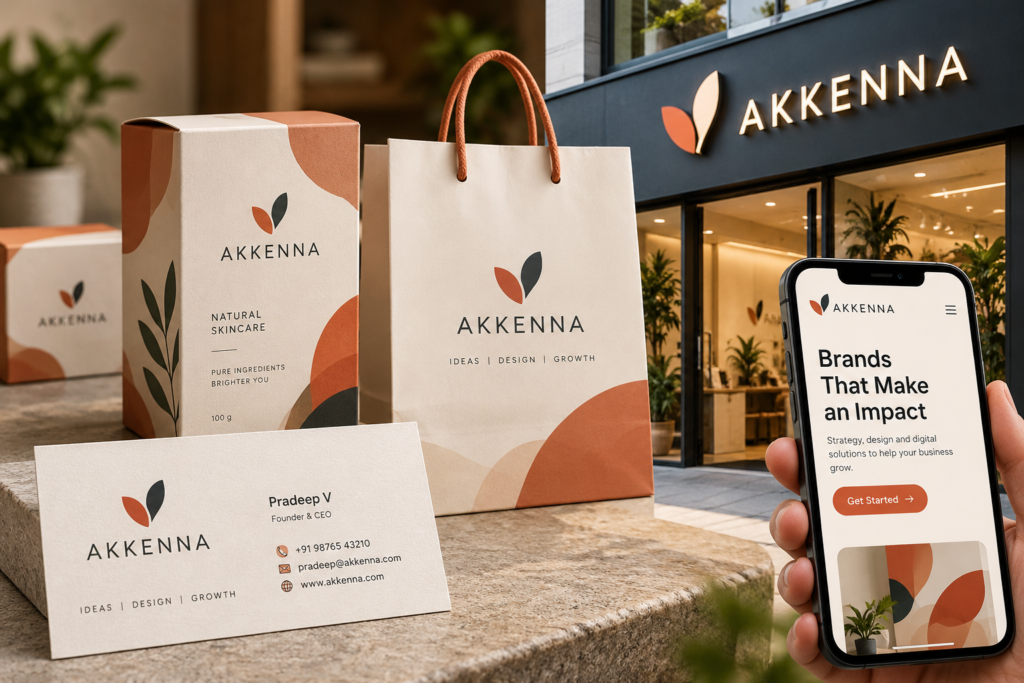
Ask five people what branding means and you’ll hear five answers: a logo, a colour palette, a reputation, a social media look, a founder’s public profile. They’re all partly right, because branding isn’t one activity. It’s a set of related approaches, and each one builds a different kind of recognition.
Knowing the types of branding helps you decide where to put your effort. A manufacturer selling to other businesses needs different branding from a skincare label on Instagram, and a consultant whose name is the business needs something different again. This guide covers 12 types of branding, what each one builds, who it suits, what to think about before investing, and how it connects to your digital presence.
A quick note: most businesses use more than one type at once. The goal isn’t to pick a single box. It’s to know which types matter most for your stage, your customers, and your budget.
What Every Type of Branding Has in Common
Every type of branding rests on the same two foundations. Brand strategy defines what the brand stands for, who it serves, and how it should be positioned. Brand identity turns that direction into something people can see and hear: a logo, colours, typography, imagery, and a consistent voice.
What changes from one type to the next is the subject of the brand (a company, a product, a person, a place) and the context it lives in (a shop shelf, a careers page, a phone screen). That’s why one business can need corporate branding for partners, product branding for shoppers, and employer branding for job seekers, all at the same time.
Types of Branding at a Glance
| Type of branding | What it builds | Often suits |
|---|---|---|
| 1. Corporate branding | Trust in the company as a whole | B2B firms, multi-product businesses, companies raising funds |
| 2. Product branding | Recognition for a specific product | Packaged goods, personal care, D2C brands |
| 3. Service branding | Confidence in an offer customers can’t touch | Clinics, agencies, consultancies, hospitality |
| 4. Retail branding | A store people remember and return to | Showrooms, fashion stores, multi-brand retailers |
| 5. Personal branding | Credibility for an individual | Founders, doctors, consultants, creators |
| 6. Employer branding | Appeal to people who might work for you | Growing teams competing for talent |
| 7. Co-branding | Reach through a partner’s audience | Brands with complementary customers |
| 8. Private label branding | Ownership of products someone else makes | Retailers, D2C sellers, distributors |
| 9. Geographic branding | Association with a place of origin | Regional products, tourism, local businesses |
| 10. Cause branding | Loyalty built on shared values | Businesses with a genuine social or environmental commitment |
| 11. Digital branding | Consistency across online touchpoints | Almost every business |
| 12. Offline branding | Presence in physical spaces and print | Retail, hospitality, healthcare, manufacturing |
Branding the Business and What It Sells
1. Corporate branding
Corporate branding builds the reputation of the company itself rather than any single product. It shapes how partners, investors, employees, and large buyers see the organisation: its values, its reliability, and what it stands for. For an engineering firm supplying distributors across India, the company name often carries more weight than any individual product.
Best for: B2B companies, groups with several product lines, and businesses preparing to raise funds or enter new markets.
Consider: corporate branding is built through consistent behaviour over years, not a single campaign. The promise has to match how the company actually operates. Our look at how big companies build their branding strategy shows how differently this can play out.
Brand and digital angle: serious buyers check the company website before they call. Professional website design and development that sets out capabilities, credentials, and contact routes in one place helps a company look as dependable as it is.
2. Product branding
Product branding gives an individual product its own name, look, and personality so it stands out on a shelf or a search results page. Some companies brand every product separately; others keep everything under the company name. Both can work. The choice usually depends on whether your products serve different customers.
Best for: packaged foods, personal care, D2C products, and businesses with ranges aimed at distinct customer groups.
Consider: every separately branded product needs its own marketing budget. If resources are limited, one master brand with clear product sub-names is often easier to sustain.
Brand and digital angle: at the point of purchase, the product’s logo design and packaging design do most of the work. Online, short product demo videos help shoppers understand what they’re buying.
3. Service branding
Service branding makes something intangible feel concrete. Customers can’t hold a service before they pay for it, so the brand has to signal quality through clarity, credentials, consistency, and the experience itself, from the first enquiry to the final invoice.
Best for: clinics, rehab centres, law and accounting firms, agencies, salons, hotels, and training institutes.
Consider: in a service business, every staff interaction is part of the brand. A calm, professional identity won’t hold up if enquiries go unanswered.
Brand and digital angle: explain your process, who delivers the service, and what customers can expect. A clear booking or enquiry flow, shaped by thoughtful UI/UX design, removes much of the uncertainty that stops people getting in touch.
4. Retail branding
Retail branding covers how a store, showroom, or chain presents itself as a destination, separate from the brands it stocks. Layout, signage, lighting, staff uniforms, shopping bags, and the online store all shape whether people remember where they bought something.
Best for: jewellery showrooms, fashion and lifestyle stores, supermarkets, and multi-brand retailers.
Consider: the physical and online experiences need to feel like the same store. A premium showroom paired with a dated website creates doubt.
Brand and digital angle: carry the in-store identity into a well-built online store through e-commerce development, and use social media marketing to give people reasons to visit between purchases.
Branding People and Teams
5. Personal branding
Personal branding builds the reputation of an individual: a founder, doctor, consultant, architect, or creator. When customers choose a person as much as a company, that person’s expertise, opinions, and visibility become part of the business’s credibility.
Best for: founders of early-stage companies, professionals in trust-driven fields, consultants, and coaches.
Consider: a personal brand is tied to one person. If the business needs to grow beyond its founder, build the company brand alongside it so the reputation doesn’t walk out the door.
Brand and digital angle: useful, consistent content does most of the work here. A focused content strategy built around a few topics you genuinely know helps you show expertise without posting for the sake of posting.
6. Employer branding
Employer branding is how a business presents itself as a place to work. It influences whether skilled people apply, accept offers, and stay. It draws on the same identity as your customer-facing brand but answers different questions: growth, culture, stability, and how people are treated.
Best for: growing teams, tech and engineering firms competing for talent, and businesses with high hiring needs.
Consider: employer branding only works if it’s honest. Candidates compare what you say with what current and former employees say.
Brand and digital angle: a clear careers page, real team stories, and behind-the-scenes posts make a difference. Short creator-style UGC videos featuring your own people often feel more believable than polished recruitment ads.
Branding Built on Partners, Place and Purpose
7. Co-branding
Co-branding pairs two brands on a shared product, campaign, or experience so each gains access to the other’s audience and credibility. A café and a speciality coffee roaster releasing a joint blend, or a fitness studio partnering with a healthy snack brand, are typical examples.
Best for: brands with complementary (not competing) customers and a similar standard of quality.
Consider: you borrow your partner’s reputation, including its problems. Agree roles, approvals, ownership of shared assets, and how the partnership ends before you launch.
Brand and digital angle: both identities need to sit together without either looking like an afterthought. Clear brand guidelines on each side make co-branded material far easier to produce.
8. Private label branding
Private label branding means selling products made by a manufacturer under your own brand name. Coimbatore’s textile and manufacturing base makes this a practical route for retailers and D2C founders who want their own label without running a factory.
Best for: retailers, D2C sellers, distributors, and businesses testing a new category.
Consider: the same manufacturer may supply similar products to others, so your brand, not the product specification, has to create the difference. Quality checks and clear contracts matter.
Brand and digital angle: this is where branding does the heavy lifting. A distinct name, identity, and packaging are often the main things separating your product from a near-identical one on the next shelf. Our guide to business ideas in Coimbatore covers several categories where this model fits.
9. Geographic (place) branding
Geographic branding links a product or business to where it comes from. Cities and tourism bodies use it to attract visitors and investment, and businesses use it when origin signals quality, such as regional textiles, hill-grown tea, or a town’s signature food.
Best for: regional food and textile products, hospitality and tourism businesses, and local providers competing with national chains.
Consider: origin is a supporting reason to buy, not the whole story. Any claim about where a product comes from, including protected regional names, must be accurate.
Brand and digital angle: local visibility matters most here. Consistent business listings, location pages on your website, and local SEO help nearby customers find you.
10. Cause or purpose-led branding
Cause branding connects a business to a social or environmental commitment its customers share, such as sustainable sourcing, fair pay for artisans, or support for a local community. Done well, it gives people a reason to choose you beyond price or features.
Best for: businesses whose operations genuinely reflect the cause, including sustainable fashion, organic food, and social enterprises.
Consider: customers notice when a cause appears only in marketing. Lead with what you actually do, and support claims with specifics.
Brand and digital angle: purpose has to be explained, not just stated. Our guide on how to build a brand story covers how to frame it around the customer, and a short 2D explainer video can show the impact clearly.
Branding Across Channels
11. Digital branding
Digital branding is how your brand shows up online: website, social media, search results, marketplaces, email, ads, and apps. For many customers the first contact with a business happens on a phone screen, so digital branding often creates the first impression.
Best for: almost every business, and especially D2C brands, online services, and anyone whose customers research before buying.
Consider: consistency is harder online because there are more touchpoints and more people creating content. Without guidelines, profiles drift apart quickly.
Brand and digital angle: a fast, clear website is the base. Paid campaigns through performance marketing work better when the ads and landing pages look and sound like the same brand. If customers use an app, the identity should carry into mobile app development too.
12. Offline branding
Offline branding covers every physical touchpoint: signage, vehicle graphics, brochures, business cards, uniforms, packaging, trade-show stands, and the look of your premises. It matters most wherever customers meet you in person or hold something you’ve handed them.
Best for: retail, hospitality, healthcare, manufacturing, and any business that meets customers face to face or exhibits at trade events.
Consider: print and signage are expensive to redo, so finalise your identity before producing materials at scale.
Brand and digital angle: offline and online should feel continuous. Professional graphic design keeps print aligned with your digital presence, and a QR code on packaging or signage can connect the two.
How to Choose the Right Types of Branding for Your Business
Most businesses don’t need all 12. Start with the two or three that match how your customers actually decide to buy.
- Starting a new business: begin with clear brand positioning and a core identity, then add product or service branding as your offer takes shape.
- Selling to other businesses: prioritise corporate branding, a credible website, and offline materials for meetings and trade events.
- Selling consumer products: focus on product branding, packaging, and digital branding wherever customers discover and compare.
- Running a clinic, firm, or agency: service branding, plus personal branding for the people who deliver the work, usually matters most.
- Hiring steadily: add employer branding before recruitment becomes a bottleneck.
- Customers can’t tell what makes you different: revisit strategy before changing how the brand looks. A new logo won’t fix unclear positioning.
How the Types of Branding Work Together
In practice, the types overlap. Take a jewellery business with a showroom and an online store. It relies on retail branding for the showroom, product branding for signature collections, personal branding if the designer is well known, digital branding for its website and Instagram, and offline branding for packaging and signage.
What stops that from feeling like five different brands is a shared foundation:
- One strategy that defines what the business stands for and who it serves.
- One identity system that every type draws from, with room for sub-brands where needed.
- Clear guidelines so designers, staff, agencies, and partners apply the brand the same way. Our guide on how to write brand guidelines covers what to include.
- One consistent voice across a product label, a job post, and a customer support reply.
A Simple Branding Checklist
- Define who you serve and what makes you different
- Decide which two or three types of branding matter most right now
- Build a core identity: name, logo, colours, typography, imagery, and voice (our guide on how to create a visual brand identity walks through each step)
- Document it in brand guidelines your team and suppliers can follow
- Apply it to your website, social profiles, packaging, and print
- Make sure customer-facing staff can explain the brand in one sentence
- Review what’s working at least once a year and refine where needed
For a fuller walkthrough, see how to do branding for a company.
Build a Brand With Direction, Not Just Design
Whichever types of branding your business needs, the principle is the same: decide what the brand stands for first, then express it consistently everywhere people meet it.
Akkenna approaches branding as more than creating a logo. We connect strategic thinking with brand identity, digital experience, and the technology customers interact with. That can cover brand strategy and positioning, identity and logo design, visual systems and brand guidelines, and then carrying the same identity into websites, UI/UX, and digital products, so the brand people see online matches the one they meet in person.
Ready to build a brand with a clear direction? Talk to Akkenna about your brand strategy and identity, or see our work first.
FAQ
What are the main types of branding? Common types include corporate, product, service, retail, personal, employer, co-branding, private label, geographic, cause-led, digital, and offline branding. Some describe what is being branded, such as a company or a person; others describe where the brand is experienced.
Which type of branding is best for a small business? It depends on how customers choose you. Service businesses usually gain most from service and personal branding; product businesses from product branding and packaging. Nearly every small business also needs basic digital branding, because customers check online before they buy.
What is the difference between corporate branding and product branding? Corporate branding builds the reputation of the company as a whole. Product branding gives individual products their own identity. Many businesses use both: a trusted company name behind products that each speak to a specific customer.
Is personal branding important for business owners? For founder-led businesses and professional services, often yes, because people tend to trust people they can see and hear from. The risk is depending on one individual, so build the company brand alongside it.
Can a business use more than one type of branding? Yes, and most do. A single business might use corporate, product, digital, and employer branding at once. A shared strategy and clear brand guidelines keep them consistent.
What is the difference between branding and marketing? Branding defines who you are and how you’re recognised. Marketing is how you reach people and persuade them to act. Marketing works harder when the brand behind it is clear, because every campaign reinforces the same idea.
Do I need a brand strategy before choosing a type of branding? Ideally, yes. Strategy clarifies who you serve and how you want to be seen, which tells you which types of branding are worth the investment. Without it, choices tend to follow trends or competitors rather than customers.
How much does branding cost? It depends on scope: research depth, the number of deliverables, packaging, digital applications, and brand guidelines all affect the investment. When comparing quotes, compare what’s included, not just the total.
