How Profitable Is the Jewellery Business? Margins, Costs, and What Drives Profit
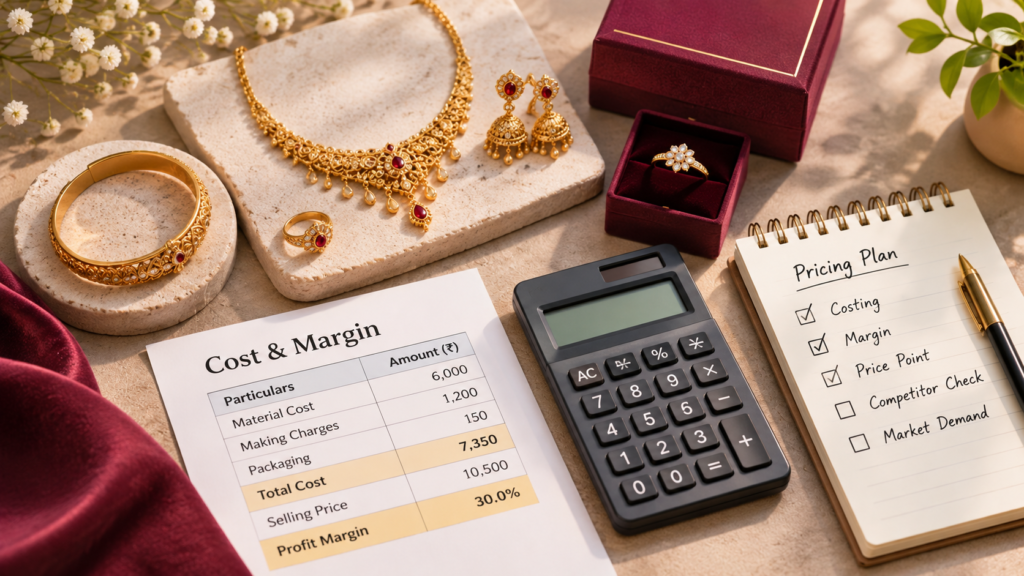
Jewellery looks like an attractive business: high-value products, strong demand around weddings and festivals, and loyal customers who return for gifts and milestones. But the honest answer to “how profitable is the jewellery business?” is: it depends enormously on what kind of jewellery you sell and how you run the business.
A gold-heavy retailer, a diamond jeweller, a silver brand, an online fashion jewellery label, and a custom bridal designer all have different margins, risks, and capital needs. This guide explains how profit works in the jewellery business, what published figures suggest about margins in India, which factors raise or lower profitability, and how a new or growing jeweller can build a more profitable business.
A note first: figures below come from public company disclosures and published analyses for specific companies and periods. They show patterns, not promises, and your own results will depend on your model, location, scale, and execution. This article is general business information, not financial advice.
The Short Answer
The jewellery business can be profitable, but it’s rarely easy money.
- Gold-heavy jewellery has thin margins. Much of the selling price is the cost of the metal itself, so the jeweller’s profit comes mostly from making charges and mix.
- Studded, designed, and brand-led jewellery can earn more per sale, but it needs more design capability, marketing, and inventory.
- It’s a working-capital-heavy business. Stock ties up significant money, and gold price swings add risk.
- Brand and trust drive pricing power. Customers pay more for jewellery they trust and love.
In other words, profitability comes less from jewellery as a category and more from where you position yourself within it.
How the Jewellery Business Makes Money
A jeweller’s income depends on the product type.
Gold jewellery
The customer’s price is typically built from the gold value plus making charges, with applicable taxes on top. Published analysis of Indian jewellery retail describes plain gold jewellery as earning making charges of roughly 6 to 15 percent of gold value, while gold in bullion form earns very little (The Daily Brief). That means a large share of what a customer pays goes straight back to buying the metal.
Studded and diamond jewellery
Stones add their own markup, the gold still earns making charges, and design adds a premium. The same analysis notes that heavily studded product mixes can reach gross margins in the mid-thirties for some retailers, although this varies widely by company and mix.
Silver, fashion, and lightweight jewellery
Where the metal content is lower and design and brand do more of the work, gross margins can be higher in percentage terms, but sales volumes, marketing costs, returns, and inventory turnover become more important. Because the economics vary so widely between businesses, it’s more useful to build your own cost model than to rely on a generic percentage.
Custom and bridal orders
Made-to-order and bridal work can allow higher margins for skilled designers and makers, since the value lies in design, craftsmanship, and personal service, though it’s also more labour-intensive and slower to scale.
What Published Figures Suggest About Margins
Looking at listed Indian jewellers gives a sense of scale, with the caveat that large chains operate differently from small shops and online labels.
- A Pune-based retailer’s leadership has described around 10 percent as the industry-standard gross profit margin for gold-dominant jewellers, with the company reporting slightly higher (Images Retail).
- A rating agency review of a large jeweller (FY2022) described operating profitability of around 10 to 11 percent, supported by making charges and a rising share of studded jewellery (CRISIL).
- Company investor presentations from listed jewellers show gross margins in the low-to-mid teens in some periods, and net margins in single digits. For example, one jeweller reported a net profit margin of about 5.7 percent in a quarter where diamond sales helped the mix (India Retailing).
- Analysts also note that jewellery margins are relatively tight compared with several other retail segments, and that rapid gold price moves can make it hard to protect profitability without affecting demand.
Put simply, large gold-focused retailers often earn modest percentage margins and make their money through volume, scale, and efficient capital use. Smaller and design-led businesses may aim for higher margins per piece, but with lower volume and different risks.
Jewellery Case Studies: How Akkenna Helped Jewellers Grow
Margins depend on more than metal prices. Brand, trust and the cost of winning customers all affect what a jeweller keeps. Here’s how four jewellers we’ve worked with tackled those levers.
1. Shree Gokulam Jewels: A consistent brand across three showrooms
The challenge: Shree Gokulam Jewels had three decades of trust and showrooms in Perambalur, Thuraiyur and Arumbavur. But its look changed from one board, bill and post to the next, and it had little online presence. Younger buyers and wedding families were searching on Instagram, where the brand barely showed up.
What we did: We designed a new logo and brand identity, then carried it into signage, packaging, bags, bills and savings scheme cards. We also ran a steady Tamil and English feed of product posts and Reels.
Results over 12 months:
- Instagram followers grew from 6.8K to 50.1K
- 2,400+ DM enquiries came from comment-keyword posts
- Festive footfall during the Diwali season rose 52%
- Savings scheme sign-ups rose 35%
Profit lesson: Savings schemes and repeat footfall bring in steady revenue without paying for every customer again. A consistent brand makes customers trust the store enough to commit.
→ Read the full Shree Gokulam Jewels case study
2. Aniga Silvers: Turning a local silver store into a national seller
The challenge: Aniga sells 92.5 sterling silver from RS Puram, Coimbatore. Its Instagram posted product photos irregularly and got few enquiries from outside the city. That’s a problem for jewellery that sells on how it looks when worn.
What we did: We ran Meta ads aimed at silver buyers in Coimbatore and across India, made UGC videos of the pieces being worn, and kept a steady organic posting rhythm that promoted All India Shipping.
Results over 6 months:
- 4.6× return on ad spend (ROAS) from ₹2.4L in Meta ad spend
- Revenue grew 68% compared with the previous six months
- Instagram followers grew from 18.2K to 83.4K
- Monthly Reel views rose from 95K to 4.9L
Profit lesson: In silver, brand and content carry most of the value, so marketing efficiency decides profit. A 4.6× return keeps ad spend from eating into the margin.
→ Read the full Aniga Silvers case study
3. Sibiraja Nagai Maligai: A rebrand that matched 25 years of trust
The challenge: Sibiraja is a 25-year-old showroom in Kangeyam known for bridal and temple jewellery. Its reputation was strong, but its brand looked dated.
What we did: We designed a new identity: a gold peacock mark taken from South Indian temple jewellery, paired with a bold Tamil wordmark. We then used it across the feed, ad creatives and the showroom. We also ran click-to-WhatsApp and Instagram DM campaigns, and every enquiry was passed to the showroom team to follow up.
Results: The store now has 16.4K Instagram followers and one consistent look at every touchpoint.
Profit lesson: A brand that looks as established as the business supports premium bridal pricing. Campaigns built to start conversations, rather than just collect likes, bring in buyers who are ready to purchase.
→ Read the full Sibiraja Nagai Maligai case study
4. Selva Maligai: Bringing a heritage jeweller to a new generation
The challenge: Selva Maligai has made jewellery since 1937 and has showrooms in Salem, Harur and Dharmapuri. Its reputation lived mostly with families who already shopped there.
What we did: We ran Meta campaigns built around each showroom’s catchment area, with separate audiences for wedding buyers, festive shoppers and repeat customers. These included lead form and click-to-WhatsApp ads, retargeting, and weekly reviews of cost per lead.
Results: The store has grown to 6K Instagram followers, and ads now reach the catchments of all three showrooms.
Profit lesson: Targeting by location and buyer type avoids wasted spend. Tracking cost per lead keeps the cost of acquiring each customer in check.
→ Read the full Selva Maligai case study
What These Case Studies Show
- Trust needs to be visible. Each of these jewellers already had a strong reputation. Growth came from making it show up consistently, both online and in the store.
- Efficient marketing protects margin. Location targeting, UGC and WhatsApp enquiries kept acquisition costs in check.
- Repeat customers lower the cost of each sale. Savings schemes, festive campaigns and follow-ups bring customers back without paying to win them again.
→ See more of our work or explore our jewellery industry services.
What Determines Profitability in Jewellery?
1. Product mix
The balance between plain gold, studded jewellery, silver, and other lines matters a great deal. A higher share of design-heavy and studded pieces tends to lift margins, while bullion-like or very plain products dilute them.
2. Making charges and pricing
How much you charge for craftsmanship and design, and how transparently, shapes both margin and trust. Frequent discounting on making charges can win footfall but erodes profit.
3. Gold and metal price volatility
Sharp price movements affect demand, inventory value, and pricing. Jewellers manage this through hedging, stock planning, and gold exchange or scheme structures, which add complexity and risk. Small businesses can be especially exposed.
4. Inventory and working capital
Holding stock costs money. Slow-moving designs tie up capital, and unsold pieces may need to be reworked or discounted. Efficient inventory turnover is a key driver of returns.
5. Operating costs
Rent, staff, security, insurance, showroom fit-out, packaging, marketing, and software all take a share. High-street locations can bring footfall but at high cost.
6. Wastage, labour, and manufacturing costs
For manufacturers and made-to-order businesses, metal wastage, artisan wages, finishing, stone setting, and quality control directly affect margins. Making charges that haven’t been reviewed for a long time may no longer cover real costs.
7. Brand, trust, and customer loyalty
Customers pay more and return more often to jewellers they trust. Brand recognition, transparent pricing, hallmarking, after-sales service, and reputation all support pricing power and repeat business.
8. Marketing and customer acquisition cost
New customers cost money to attract, particularly online. Businesses that rely heavily on discounts and paid ads can find acquisition costs eating into margins, while those with strong brands and referrals spend less to sell more.
9. Returns, exchanges, and schemes
Returns are more common online, and exchange and savings schemes bring operational and financial obligations. These need careful accounting.
10. Compliance and taxes
Hallmarking requirements, licensing, tax obligations, and record-keeping affect costs and processes. Check current rules for your product type and location, since they change.
A Simple Way to Think About Jewellery Profit
Here’s an illustrative example only, with round numbers chosen for simplicity and not representing any real business.
Imagine a designer silver and gold-plated label selling a piece for ₹2,000:
- Materials and stones: ₹600
- Manufacturing labour and wastage: ₹250
- Packaging and delivery: ₹150
- Payment charges and returns allowance: ₹100
- Gross profit after direct costs: ₹900
- Marketing and acquisition: ₹450
- Overheads (team, tools, rent, software), per piece: ₹250
- Profit per piece: roughly ₹200
The point isn’t the numbers. It’s that the profit left after marketing and overheads can be much smaller than the gross margin suggests. This is why jewellers need to understand their full cost structure, not just the markup on each item.
Is Online Jewellery More or Less Profitable?
Online selling changes the economics rather than guaranteeing better or worse profit.
Potential advantages:
- Wider reach beyond your local area
- Lower showroom and staffing costs
- Direct relationships with customers
- Better data on what sells
Potential challenges:
- Higher customer acquisition costs
- Trust barriers, since customers can’t touch or inspect pieces
- Returns, exchanges, and shipping and insurance costs
- Heavy competition from marketplaces and other labels
- The cost of quality photography, packaging, and customer service
Online jewellery succeeds when the brand is distinctive, product information is honest and detailed, and the website makes buying easy. Dependable e-commerce development provides the structure for catalogue management, payments, and growth, and a strong brand site built through web design and development helps establish credibility.
How to Make a Jewellery Business More Profitable
Margins improve when a jeweller makes deliberate choices about what to sell, to whom, and how.
Choose a clear niche and positioning
Competing as a general jeweller means competing on price. Specialising, for example in lightweight daily-wear gold, handcrafted silver, temple jewellery, bridal, or custom pieces, helps you stand apart and justify your pricing. A clear brand strategy defines who you serve and why you’re different, which supports pricing power.
Build a recognisable brand
Brand is one of the few things that lets a jeweller earn more for similar materials. A distinctive brand identity and a professional logo design signal quality and make your pieces memorable. For a deeper look at the steps involved, see [How to Build a Jewellery Brand: A Step-by-Step Guide for Founders].
Invest in design and craftsmanship
Original designs, quality finishing, and consistent standards create value beyond the weight of the metal. Strong design is often what allows a higher making charge or premium price.
Improve the product mix thoughtfully
Increasing the share of higher-margin lines, such as studded, custom, or design-led pieces, can lift overall margins, as long as demand and quality support it. Don’t chase mix changes that your customers aren’t ready for.
Manage inventory carefully
- Track which designs sell and which don’t
- Avoid overstocking slow-moving pieces
- Use made-to-order or limited drops where appropriate
- Keep stock records accurate and regularly audited
Present the product beautifully
Packaging, photography, and presentation raise perceived value and support gifting. Thoughtful packaging design turns delivery into an experience customers share, and consistent graphic design across tags, cards, catalogues, and social posts reinforces your brand.
Build trust through transparency
Clear information on materials, purity, stones, pricing, hallmarking, and policies reduces hesitation and returns. Trust is particularly valuable in a category where customers can’t easily verify quality themselves.
Reduce reliance on discounts
Frequent discounting trains customers to wait for offers and compresses margins. Compete on design, service, and brand value instead, and use offers sparingly and strategically.
Focus on repeat customers and referrals
Jewellery customers often return for occasions, gifts, and upgrades. Excellent after-sales service, repairs, personalised follow-up, and occasion reminders can reduce acquisition costs over time.
Market efficiently
Use content and social media to tell your story, show craftsmanship, and keep customers engaged. Regular social media marketing builds visibility, creator-style UGC videos show real people wearing your pieces, and a content strategy helps you plan styling guides, gifting ideas, and occasion-led content. Once your product pages convert, structured performance marketing can extend your reach and keep spending tied to results.
Know your numbers
Track gross margin by product line, inventory turnover, customer acquisition cost, repeat purchase rate, return rate, and net profit. Review making charges, wastage, and overheads regularly rather than letting them drift.
Risks to Consider Before You Start
- Capital requirements. Stock and working capital can be significant.
- Price volatility. Metal price swings can affect demand, inventory value, and margins.
- Theft, insurance, and security. High-value goods need safeguards.
- Competition. Local jewellers, organised chains, and online labels all compete.
- Compliance. Hallmarking, tax, licensing, and customer protection rules apply.
- Seasonality. Demand clusters around weddings and festivals, so cash flow can be uneven.
- Trust sensitivity. Reputation damage can be costly and slow to repair.
- Dependence on discounts. Competing on price can erode margins.
Who Is Likely to Do Well?
Jewellery businesses tend to perform better when they have:
- A clear niche and customer
- Distinctive design or craftsmanship
- Strong trust and transparent practices
- Disciplined inventory and cost control
- A recognisable brand
- Good customer service and repeat business
- Enough working capital to ride out slow periods
A Quick Profitability Checklist
- Niche and customer defined
- Product mix planned with margin in mind
- Costs mapped, including metal, labour, wastage, packaging, marketing, and overheads
- Making charges and pricing reviewed regularly
- Inventory and slow-moving stock tracked
- Working capital and cash flow planned
- Compliance and tax requirements checked
- Brand identity, packaging, and photography professional
- Website or store ready to convert
- Customer service and repeat-purchase plan in place
- Key numbers tracked monthly
Final Thought
The jewellery business can be rewarding, but profit rarely comes from the category itself. It comes from choosing a clear position, managing costs and inventory carefully, building trust, and creating a brand customers want to return to. Understand your margins before you invest, price for value rather than discounts, and build something people recognise.
If you’re launching or growing a jewellery brand and want help with positioning, identity, packaging, website, or marketing, talk to Akkenna.
FAQ
How profitable is the jewellery business? It varies widely. Gold-heavy retail often earns modest percentage margins, while studded, design-led, and brand-led jewellery can earn more per piece. Profit depends on product mix, costs, inventory, brand strength, and scale.
What is the profit margin in jewellery? Published figures for listed Indian jewellers show gross margins in the low-to-mid teens for gold-heavy businesses and higher for studded-heavy mixes, with net margins typically in single digits. Smaller and online businesses differ, so build your own cost model.
Is gold jewellery or silver jewellery more profitable? It depends on your model. Silver and fashion jewellery can offer higher percentage margins but often need greater volume and marketing, while gold jewellery involves higher capital and thinner margins. Neither is automatically more profitable.
Is online jewellery business profitable? It can be, but it has its own challenges, including acquisition costs, returns, trust barriers, and competition. Success depends on a distinctive brand, honest product information, and an efficient store.
How much investment do I need to start a jewellery business? It depends on your model. Fine jewellery retail needs significant stock and working capital, while made-to-order, small-batch, or drop-based models can start leaner. Plan for inventory, marketing, packaging, and compliance.
What are the biggest risks in the jewellery business? Metal price volatility, high working capital needs, inventory risk, competition, compliance requirements, security, seasonality, and reputational sensitivity.
How can I increase profit in a jewellery business? Focus on a clear niche, improve product mix, build a strong brand, control inventory and costs, reduce reliance on discounts, offer excellent service, and track your numbers closely.
Does branding really affect jewellery profit? Yes. Strong branding helps customers trust and recognise you, supports higher pricing, reduces reliance on discounts, and improves repeat business.
